
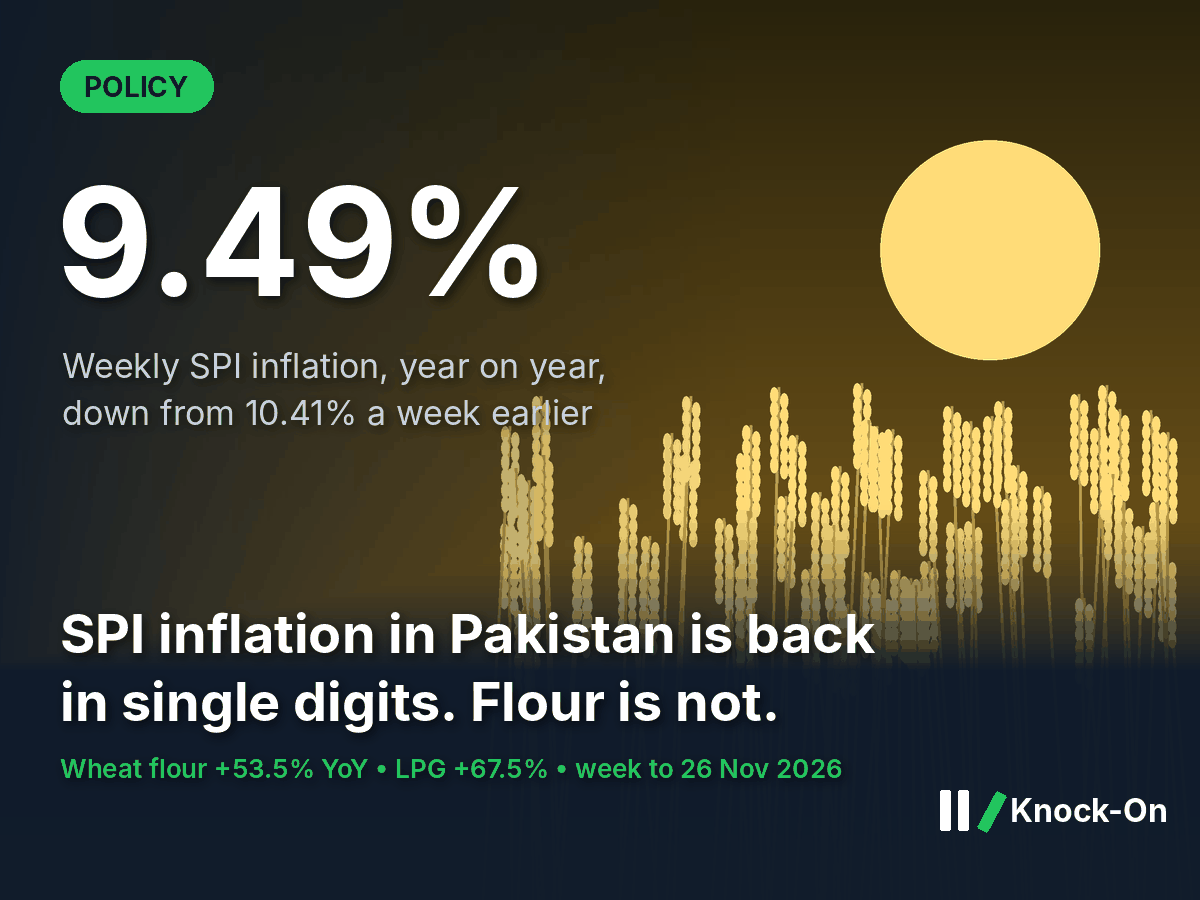
SPI inflation in Pakistan eased to 9.49% year on year in the week ended 26 November, from 10.41% the week before, according to the Pakistan Bureau of Statistics (PBS) figures reported on Friday. The Sensitive Price Indicator, which tracks 51 essential items across 17 cities, fell 0.11% from the previous week. Dawn reported that cheaper petrol and diesel had brought short-term inflation back into single digits after several weeks above 10%. But wheat flour rose 5.72% in the week and is now 53.53% dearer than a year ago.
The short version
- Weekly SPI inflation fell to 9.49% year on year, from 10.41% a week earlier and 11.21% the week before that.
- The index fell 0.11% week on week, the third marginal weekly decline in a row, Dawn reported.
- Petrol fell 2.48% and diesel 1.99% in the week; tomatoes and onions fell more than 20%.
- Wheat flour (+53.53%) and LPG (+67.49%) remain the biggest year-on-year increases.
What happened
Of the 51 items in the SPI basket, 20 became more expensive during the week, 9 became cheaper and 22 were unchanged. The largest weekly increases were wheat flour (5.72%), electricity charges for the lowest consumption group, Q1 (5.43%), eggs (4.36%) and chicken (4.14%). The largest falls were tomatoes (23.92%), onions (21.27%), LPG (7.78%), petrol (2.48%) and diesel (1.99%).
Fuel has been the main source of relief. Dawn calculated that diesel fell from Rs398.80 to Rs346 a litre over the 25 days to 27 November, and petrol by about Rs83 a litre over the same period; the petrol price now stands at Rs314 after the latest cut in the petrol price in Pakistan. Even so, petrol is still 18.34% and diesel 22.36% dearer than a year ago, according to the SPI data.
Headline SPI is under 10%, but flour is rising more than five times as fast
Year-on-year price change, %, week ended 26 November 2026 (PBS Sensitive Price Indicator)
Why it matters
SPI inflation is the most up-to-date read on the prices households and small businesses pay, and it shapes expectations ahead of the monthly CPI release and the State Bank’s rate decisions. A move back below 10% helps the case that the recent oil shock is fading. But the gap between the headline and staples matters for business: wheat flour is the single biggest food cost for low-income households, and Knock-On reported last week that the flour price in Pakistan was up 44% in a year even after Punjab fixed a wheat release price. On this week’s data, that gap has widened to 53.53%.
The knock-on effects
First order: transport and fuel costs ease for business
Lower petrol and diesel prices cut running costs for transporters, distributors and farmers. Dawn noted, however, that provincial governments have not yet cut passenger and freight fares to match, which it said keeps the prices of perishable goods high.
Second order: food staples squeeze spending
With flour, chicken and low-band electricity all up 29–54% in a year, lower-income households have less left for other purchases. Retailers of non-essential goods and fast-moving consumer goods companies selling to mass-market buyers are most exposed to that squeeze.
Third order: SPI inflation and the interest-rate path
If single-digit weekly readings continue, it would ease some pressure on monetary policy. Standard Chartered has forecast that the SBP interest rate could rise to 13% by June 2027, citing high oil prices rather than demand, so the direction of fuel prices remains the key swing factor for borrowers.
Who could benefit
- Transporters and logistics firms, as diesel costs fall.
- Sugar buyers, including confectioners and beverage makers, with sugar 26.56% cheaper than a year ago.
- Borrowers, if easing inflation reduces pressure for higher interest rates.
Who may face pressure
- Bakeries, restaurants and food processors buying flour at prices 53.53% higher than last year.
- LPG-using households and small businesses, with LPG still 67.49% dearer despite a 7.78% weekly fall.
- Poultry buyers, after chicken rose 4.14% in the week and 30.10% in a year.
What to watch
- November CPI from PBS, due in early December, to see whether monthly inflation follows the SPI lower.
- The next fuel price review, after Brent jumped on attacks on Saudi facilities this week.
- Provincial transport fares, and whether they are cut to match fuel prices.
- Wheat and flour prices as provinces manage stocks into the new year.
Sources
- Dawn, Short-term inflation clocks in at 9.49pc driven by wheat flour prices, 27 November 2026
- TechJuice, Pakistan’s weekly inflation falls 0.11% as annual rate reaches 9.49%, 27 November 2026
- Bloom Pakistan, Pakistan’s SPI falls 0.11% but annual inflation remains at 9.49%, 27 November 2026
This is analysis, not investment advice. Figures are as of 27 November 2026.
Leave a Reply