

New US tariffs proposed on Wednesday would hit 14 economies with duties of up to 35%, and Pakistan is not one of them. The list includes several of Pakistan’s direct competitors in textiles and apparel: Vietnam, India, Bangladesh, Cambodia, Indonesia and China. For Pakistani exporters, the question of US tariffs and Pakistan is now about relative price: if the proposals become final, rivals could become more expensive in the US market while Pakistani goods stay where they are. The rates are still proposals, and Pakistan’s existing US duties remain in place.
The short version
- The US Trade Representative (USTR) proposed tariffs on 14 of 16 economies it investigated for “structural excess capacity” in manufacturing.
- Proposed maximums include Vietnam up to 35%, India up to 25%, China up to 20%, and Bangladesh, Cambodia and Indonesia up to 18%.
- Pakistan was not among the economies investigated. Written comments are due on 5 January 2027 and hearings start on 25 January.
- No effective date has been set, and some rates could fall if countries reach deals with Washington.
What happened
On 25 November, the USTR announced determinations in 14 Section 301 investigations it opened on 11 March into what it calls structural excess capacity and production in manufacturing. It proposed tariffs on China, the European Union, Japan, Korea, Taiwan, Switzerland, Singapore, India, Vietnam, Bangladesh, Cambodia, Indonesia, Malaysia and Thailand. It made no determination for Mexico and Norway, the other two economies investigated. AFP, reported by Dawn, said the investigation began days after the US Supreme Court struck down earlier tariffs.
The rates are stated as “up to” maximums and are net of existing Section 301 duties. Law firm Kelley Drye notes that some could move: India’s rate could fall to 17% and Vietnam’s to 20% with agreements, while several others could rise to 25%. The Bangladesh, Cambodia, India and Malaysia notices also ask for comments on a tariff-rate quota that would allow some textiles and apparel in at a lower rate.
Pakistan’s garment rivals face new US tariffs; Pakistan is not named
Proposed maximum new US tariff rate, %, announced 25 Nov 2026 (not final)
Why it matters
The US is a key market for Pakistan’s home textiles, denim and apparel, and these products compete mainly on price against Bangladesh, Vietnam, India, Cambodia and China. A Bangladeshi analysis by Dailywaadaa notes that Pakistan, “a major producer of cotton-based textiles and denim”, is not among the 14, while cautioning that this does not exempt Pakistani goods from existing US duties. The impact on Pakistan is therefore indirect: no new cost for its own exporters, but potentially higher costs for rivals. Garments were one of the few growing parts of industry in the first quarter, as our look at LSM growth in Pakistan showed.
The knock-on effects
First order: a price gap opens on paper
If the US tariffs are finalised at or near the proposed levels, US buyers sourcing from Vietnam, India or Bangladesh would face higher landed costs than for comparable Pakistani goods. US importers often start reviewing suppliers well before rates take effect.
Second order: orders and capacity
Any shift in orders would test Pakistani mills’ capacity, energy costs and delivery times. Higher utilisation would help export earnings and the rupee, but high power and gas tariffs remain the main constraint exporters cite.
Third order: markets and policy
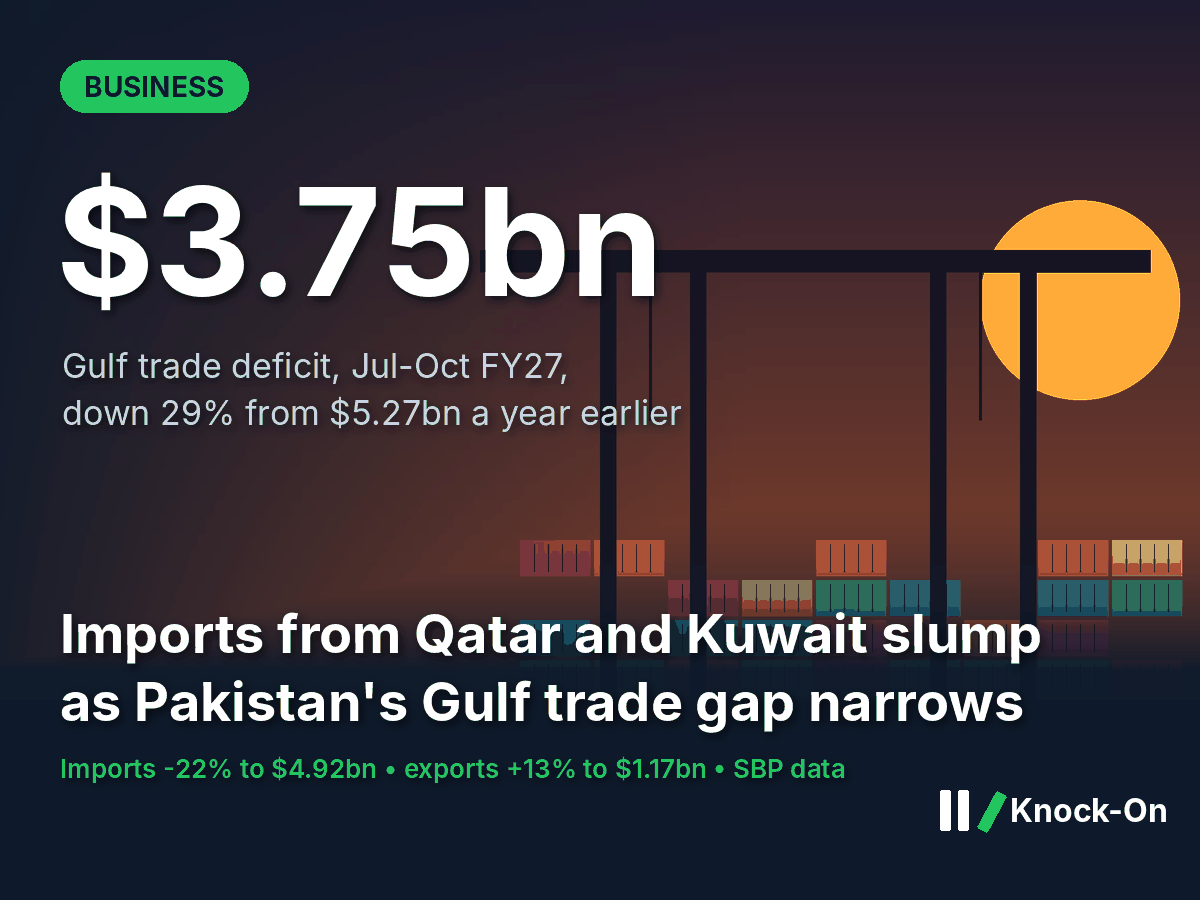
Global tariff news has already moved the PSX this week; the KSE-100 fell 421 points on Wednesday as US tariff threats hit Asian markets. Over time, the gap could also shape Pakistan’s own trade talks with Washington and its push to diversify exports, as seen in its narrowing Gulf trade deficit.
Who could benefit
- Textile and apparel exporters selling denim, home textiles and knitwear to US buyers.
- Listed textile companies, if investors price in a better US order outlook.
- Logistics and ports, from any rise in export volumes.
Who may face pressure
- Exporters if global demand weakens because of wider tariffs, offsetting any price advantage.
- Firms that import inputs or machinery from China, if Chinese suppliers redirect or reprice goods.
- Energy-intensive mills that cannot add capacity at current power and gas costs.
What to watch
- 5 January 2027: deadline for written comments and hearing requests.
- 25 January 2027: USTR public hearing begins.
- Whether India, Vietnam or others secure deals that cut their rates, and how the textile tariff-rate quota is designed.
- Any statement from Pakistan’s commerce ministry or textile exporters on US orders.
Sources
- USTR, USTR Makes Determinations and Proposes Actions in 14 Section 301 Investigations, 25 Nov 2026
- Kelley Drye, USTR Proposes Section 301 Overcapacity Tariffs on 14 of 16 Economies Investigated, 25 Nov 2026
- Dawn (AFP), Trump targets excess production abroad, 26 Nov 2026
- Dailywaadaa, Can Bangladesh’s garment industry absorb a proposed 18% US tariff and a 36% wage hike?, 26 Nov 2026
This is analysis, not investment advice. Figures are as of 26 November 2026. Knock-On is not affiliated with any political party.
Leave a Reply