
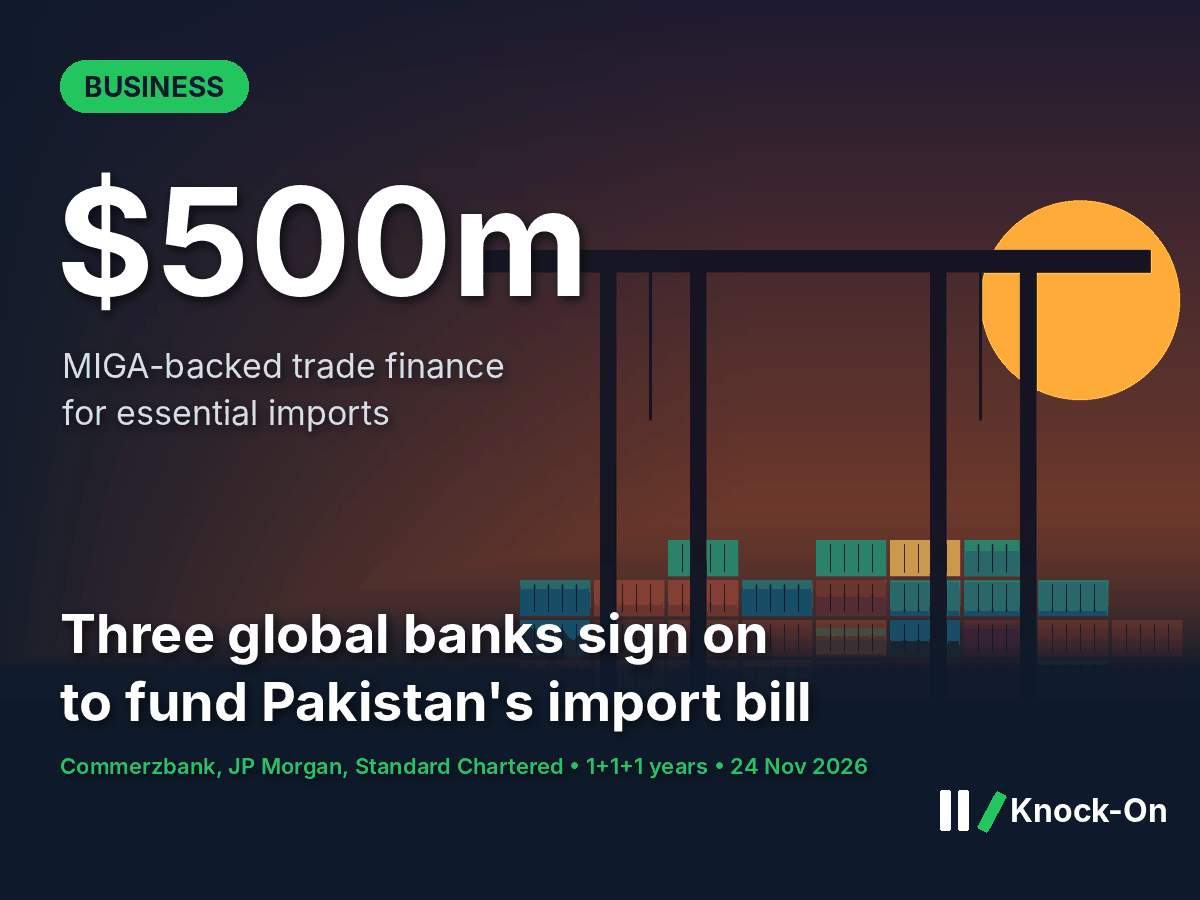
Pakistan has chosen a consortium of Commerzbank, JP Morgan and Standard Chartered to provide a $500m trade finance facility backed by MIGA, the World Bank Group’s guarantee arm, Dawn reported on Tuesday night. The MIGA trade finance facility will pay for essential imports and trade-related spending. The amount is modest next to Pakistan’s import bill, but the deal brings two big Western banks into lending to the government for the first time, and it is Pakistan’s first credit-enhancement deal under MIGA’s trade finance programme.
The short version
- Size: $500m, for one year, renewable on a rolling “1+1+1” basis.
- Lenders: Commerzbank, JP Morgan and Standard Chartered, picked from bids by nine international institutions on the most competitive terms.
- Commerzbank and JP Morgan have not lent commercially to the government before.
- Pricing and the size of MIGA’s guarantee have not been disclosed.
What happened
Finance Minister Muhammad Aurangzeb chaired a virtual meeting on 24 November that selected the three banks, according to Dawn. The facility is backed by the Multilateral Investment Guarantee Agency (MIGA), a World Bank Group member, which lowers the lenders’ risk and so should lower the cost to Pakistan. The government described it as the first-ever credit enhancement transaction with MIGA under its Trade Finance programme. The money is earmarked for essential imports and trade-related expenditure.
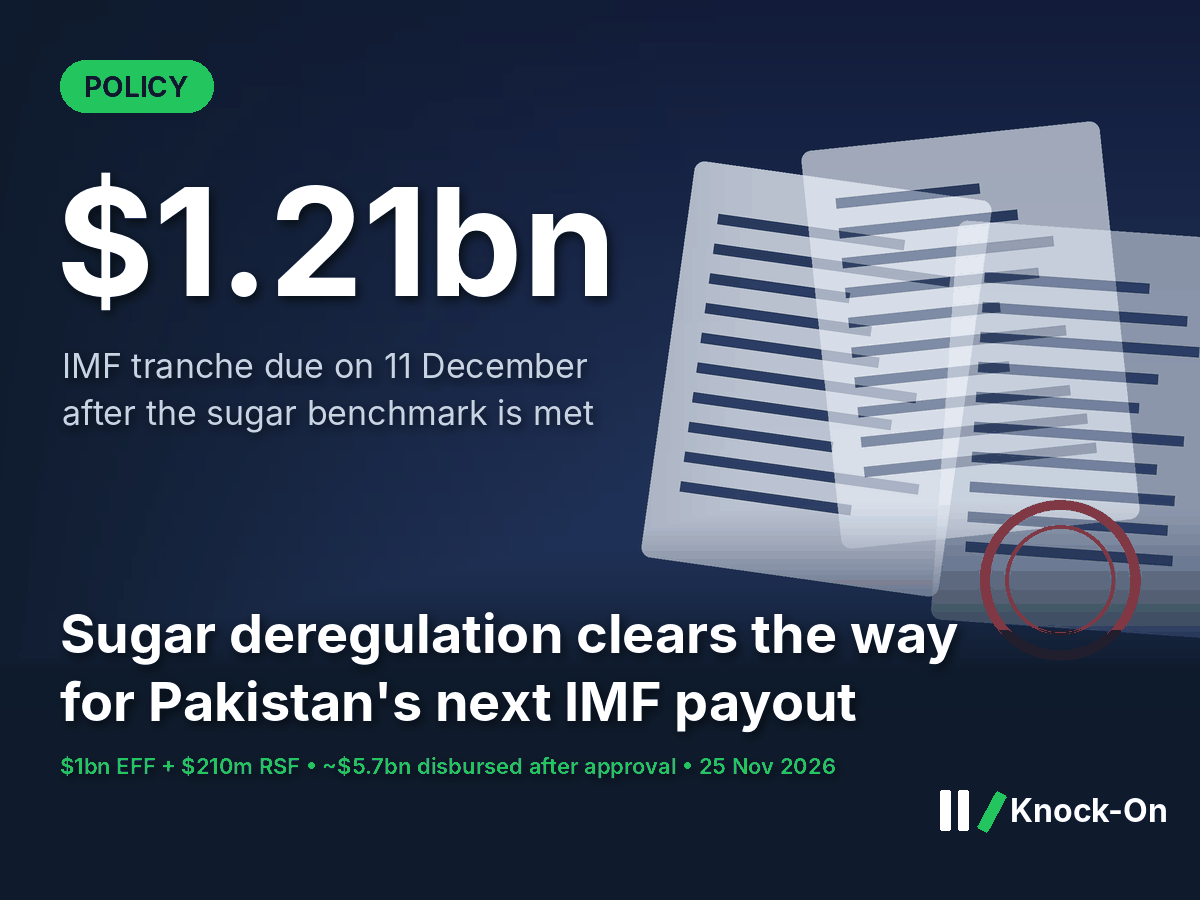
The deal comes a day before news that the IMF board is expected to release about $1.21bn on 11 December, which we cover in our story on the IMF tranche for Pakistan. Together with a smaller oil credit line from Oman, it is part of a pattern: Pakistan is adding several mid-sized financing lines rather than relying on one big lender.
The MIGA facility is the second-largest new financing line this month
New external financing lines reported in November 2026, US$ million
Why it matters
Trade finance is what keeps fuel, food and industrial inputs arriving. Pakistan’s trade deficit widened 16% to $14.63bn in July–October, so every dollar line that funds imports eases pressure on reserves. Just as important, a guaranteed facility from top-tier banks gives the MIGA trade finance facility a reference price that Pakistan can use in future borrowing.
The knock-on effects
First order: cheaper dollars for essential imports
With a World Bank Group guarantee behind it, the facility should cost less than Pakistan’s unsecured commercial borrowing, although the terms have not been published.
Second order: a wider pool of lenders
Nine international institutions bid, and two of the three winners had never lent commercially to the government before. A bigger pool of lenders gives the finance ministry more options when facilities come up for renewal or refinancing.
Third order: a template for more guaranteed deals
If the 1+1+1 renewals go ahead smoothly, the model could be repeated for larger sums or other sectors. That depends on Pakistan staying on track with the IMF programme, which lenders watch closely.
Who could benefit
- Importers of essentials: more dollar liquidity for fuel, food and raw materials.
- Fuel suppliers: along with the Oman oil credit facility, more ways to fund cargoes.
- Banks: a benchmark for pricing Pakistan sovereign risk with a guarantee.
Who may face pressure
- The finance ministry: a one-year tenor means repayment or renewal comes round quickly.
- Exporters, if extra import funding widens the trade gap without a matching rise in exports.
What to watch
- Signing and disbursement dates, and whether pricing is disclosed.
- 11 December: the IMF board review, which underpins lender confidence.
- SBP reserves in weekly data once the money arrives.
- First renewal in about a year.
Sources
- Dawn, Govt selects consortium of 3 foreign banks for $500m finance facility backed by MIGA, 24 November 2026
- Dawn, Pakistan eyes $1.21bn IMF disbursement next month, 25 November 2026
This is analysis, not investment advice. Figures are as of 25 November 2026.
Leave a Reply