
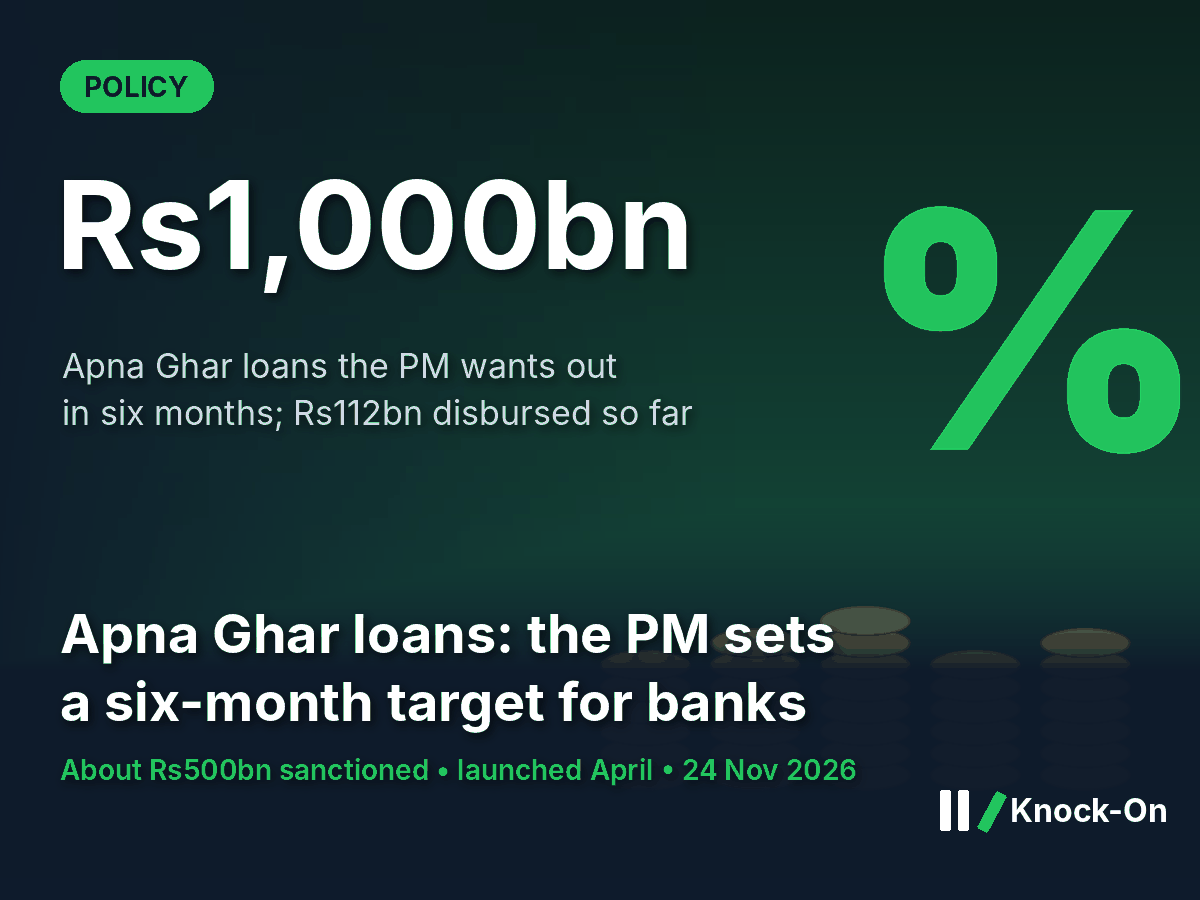
Apna Ghar loans are now one of the government’s most visible economic targets. At a ceremony in Islamabad on Monday, Prime Minister Shehbaz Sharif said Rs1,000 billion in soft housing loans should be disbursed over the next six months, and gave the finance minister, the State Bank governor and the housing minister that goal, Dawn reported. Banks have so far disbursed Rs112bn under the programme, which started in April, against nearly Rs500bn sanctioned.
The short version
- The PM has set a Rs1,000bn, six-month disbursement goal for Apna Ghar loans.
- Banks have disbursed Rs112bn since April; about Rs500bn has been sanctioned.
- The PM said banks were reluctant because treasury bills and government deposits give comfortable returns.
- The builders’ association ABAD says 500,000 homes can be built if all parties work together.
What happened
The ceremony marked more than Rs100bn in loans under the Apna Ghar Programme. Five banks were named top performers: United Bank, Habib Bank, Bank Alfalah, Meezan Bank and Mobilink Microfinance Bank. The PM said they would receive blue passports, with bank owners or chief executives deciding who holds them. “This is a good start, but the journey ahead is long and must be covered at lightning speed,” he said.
Mr Sharif said some banks had told borrowers they were unaware of the scheme, which he called “unacceptable”, and urged banks to set up dedicated cells. He also said a clear property title is the main requirement for a loan. ABAD chairman Hanif Kohari said the target of 500,000 homes could be met if all parties acted in harmony. It is the second time this month the PM has pressed banks on targeted lending, after he told regulators to show no leniency to banks that are slow on SME loans in Pakistan.
Why it matters
The gap between the target and the record so far is large. Banks have disbursed about Rs15bn a month on average since April (Knock-On calculation). Reaching Rs1,000bn in six months would take roughly Rs150bn or more a month, about ten times the current pace. Apna Ghar loans compete with an easy alternative for banks: lending to the government. At recent T-bill auctions in Pakistan banks offered far more than the government wanted to borrow.
Disbursements are about a tenth of the target
Apna Ghar housing loans, Rs billion, as of 23 November 2026
The knock-on effects
First order: banks under pressure to lend
Banks will be pushed to turn sanctions into disbursements faster, set up the dedicated cells the PM asked for and speed up title checks. Lenders with large government bond books may face the most scrutiny.
Second order: demand for building materials
If disbursements do speed up, the money flows to builders, cement, steel, tiles, wiring and labour. That would support construction activity at a time when business confidence is weak.
Third order: credit mix and interest rates
A large shift of bank money from government paper to housing could change the credit mix, but loan growth also adds to demand at a time when the SBP interest rate may rise, according to one bank’s forecast. Bad loans are a risk if lending is rushed.
Who could benefit
- First-time home buyers: access to soft loans for small homes.
- Builders and developers: more financed buyers for low-cost housing.
- Cement, steel and fittings makers: extra domestic demand if construction picks up.
Who may face pressure
- Slower banks: public criticism and possible regulatory pressure.
- Applicants without clear titles: they remain shut out until land records improve.
- The budget: any subsidy cost rises with the size of the programme.
What to watch
- Monthly disbursement updates from the finance ministry and the State Bank.
- Whether banks set up the dedicated housing-loan cells the PM requested.
- The SBP’s next monetary policy decision and T-bill yields, which shape banks’ incentive to lend.
Sources
- Dawn, Rs1tr home loans to be doled out over six months: PM, 24 Nov 2026
- Dawn, PM Shehbaz vows no cap on homes for poor, sets Rs1,000bn disbursement target under Apna Ghar scheme, 23 Nov 2026
This is analysis, not investment advice. Figures are as of 24 November 2026. Knock-On is not affiliated with any political party.
Leave a Reply