
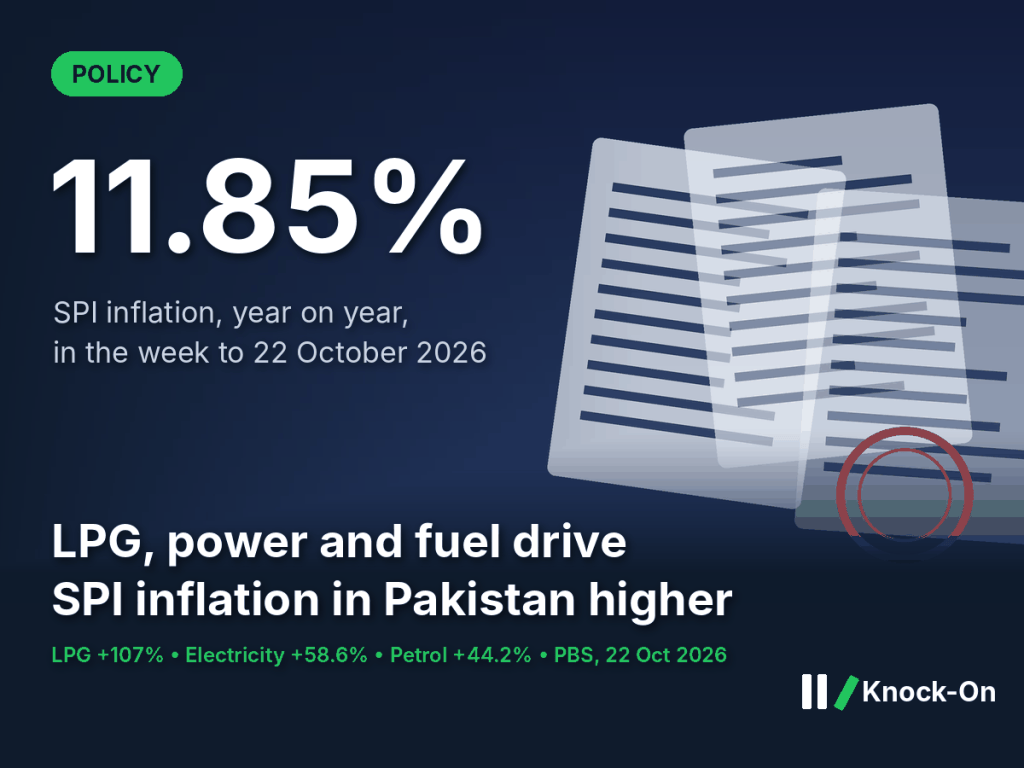
SPI inflation in Pakistan, the weekly measure of 51 essential prices, rose to 11.85% year on year in the week to 22 October, up from 11.38% a week earlier. The Pakistan Bureau of Statistics data shows prices rose 0.65% in a single week. The biggest annual increases are in energy: LPG, electricity, petrol and diesel. The reading arrives two days before the State Bank of Pakistan announces its next interest rate decision.
The short version
- The Sensitive Price Indicator (SPI) rose 0.65% in the week to 22 October; the annual rate climbed to 11.85% from 11.38%.
- LPG jumped 22.44% in one week and is up 107.12% on a year ago.
- Four of the five biggest annual increases are energy items: LPG, electricity, petrol and diesel.
- Petrol and diesel fell during the survey week, but diesel has since risen again to Rs393.66 a litre.
What happened
The Pakistan Bureau of Statistics tracks 51 items in 50 markets across 17 cities every week. In the week to 22 October, 19 items became dearer, 12 became cheaper and 20 did not change, according to figures reported by Business Recorder and Dawn on 24 October.
The largest weekly increases were LPG (22.44%), chicken (12.2%), onions (4.19%), plain bread (1.66%) and wheat flour (1%). The largest weekly falls were tomatoes (21.99%), petrol (3.63%), bananas (2.42%) and diesel (1.68%). The rise in LPG follows the closure of the Iran border, which Knock-On covered in its report on the LPG shortage in Pakistan and cylinder prices.
Over twelve months, the picture is clearer. Energy dominates the list of the steepest annual increases, while some food items such as tomatoes (down 71.72%), potatoes (down 40.75%) and sugar (down about 25%) are much cheaper than a year ago.
Energy leads the biggest price rises in a year
Year-on-year change in SPI items, %, week to 22 October 2026 (energy items in green)
Why it matters
SPI inflation in Pakistan is a weekly snapshot, not the official monthly consumer price index, but it is the freshest signal the State Bank has before its Monetary Policy Committee meets. Knock-On’s preview of the SBP interest rate decision on 26 October found analysts split between a hold and a hike. A higher weekly reading, driven by fuel and energy, supports the case made by those who expect the central bank to stay cautious. Business groups are pushing the other way: Business Recorder reported on 23 October that industrialists had warned against policy rate hikes.
The composition also matters. Energy prices feed into almost everything a business sells, from transport to cooking costs in restaurants. Weekly data shows the heaviest rise was felt by the highest income group (0.74%), while the lowest income group saw 0.51%.
The knock-on effects
First order: energy keeps SPI inflation in Pakistan high
Households and small businesses that cook or heat with LPG are paying about twice what they paid a year ago. Electricity is up 58.59% for the first quarter, according to the SPI data.
Second order: fuel costs pass into food and freight
Petrol and diesel fell during the survey week, but diesel was raised again to Rs393.66 a litre for 24 to 26 October, as Knock-On’s diesel price and freight costs report explains. That reverses part of the weekly relief and keeps transport costs for food, such as wheat flour and chicken, under pressure.
Third order: interest rates and borrowing costs
If the SBP reads persistent energy inflation as a risk, borrowing costs for businesses could stay higher for longer. That would weigh on working capital, inventory financing and consumer credit.
Who could benefit
- Savers and deposit holders if rates stay high, as returns on deposits and savings schemes remain elevated.
- Food businesses buying tomatoes, potatoes and sugar, which are much cheaper than a year ago.
- Alternative fuel suppliers, such as firewood and solar sellers, as LPG becomes harder to afford.
Who may face pressure
- Restaurants, bakeries and small food outlets that rely on LPG.
- Transport and logistics firms facing higher diesel costs.
- Borrowers, if the SBP holds or raises its policy rate.
- Retailers of consumer goods, as households spend more on energy and food.
What to watch
- Monday 26 October: the SBP’s interest rate decision.
- Next week’s SPI release: whether LPG prices ease and whether the diesel rise shows up.
- Early November: the October consumer price index from the Pakistan Bureau of Statistics.
- Daily fuel price revisions, which now follow international oil prices closely.
Sources
- Business Recorder, Weekly SPI inflation up 0.65pc, 24 October 2026
- Dawn, Flour fuels weekly inflation, 24 October 2026
- Dawn, Govt raises high-speed diesel rate by Rs1.91 per litre; petrol price unchanged at Rs377.71, 23 October 2026
- Business Recorder, Industrialists warn against policy rate hikes, 23 October 2026
This is analysis, not investment advice. Figures are as of 24 October 2026.

Leave a Reply