
The Yanbu pipeline attack claims made by Yemen’s Houthis this week strike at the route Pakistan has leaned on for Saudi crude since the Strait of Hormuz was blockaded. The Houthis say they hit a pumping station on Saudi Arabia’s East-West pipeline and an oil facility at Yanbu. Saudi Arabia says an earlier strike on the pipeline caused only a limited fire and did not affect operations. For Pakistani businesses, the question is whether a run of fuel price cuts can survive a threat to the Red Sea bypass.
The short version
- The Houthis claimed drone and missile attacks on Pumping Station No. 7 of the East-West pipeline, a Yanbu oil facility and an Aramco building in Riyadh. Saudi Arabia had not commented on these specific claims.
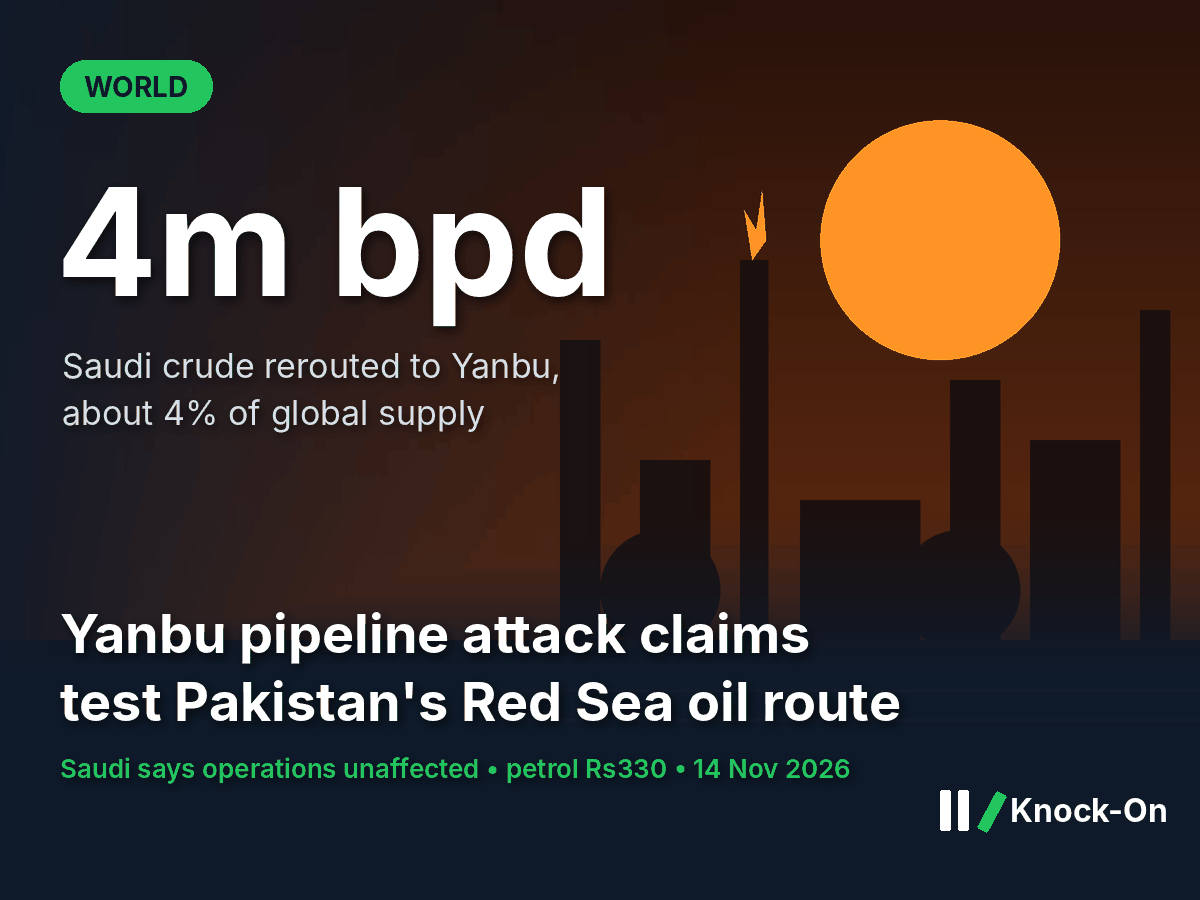
- Saudi Arabia moves about 4 million barrels a day of crude to Yanbu through the pipeline, about 4% of global supply, according to Reuters.
- Pakistan has been importing Saudi crude via Yanbu and the Red Sea since March. Petrol fell to Rs330 a litre on 14 November.
- Any real outage at Yanbu would hit Pakistan’s fuel supply and prices faster than most of the war’s other shocks.
What happened
On Thursday, 12 November, Houthi spokesman Yahya Saree said on X that one operation targeted Pumping Station No. 7 on the East-West pipeline with a drone and another targeted the Yanbu oil facility with a ballistic missile, The New Arab and Reuters reported. He also claimed strikes on an Aramco building in Riyadh and on Saudi military sites, and called them all successful. He gave no details of damage, and the claims could not be independently verified.
The Saudi-led coalition said it intercepted and destroyed drones over the Riyadh region and the Eastern Province, and ballistic missiles aimed at western Saudi Arabia. Saudi state media said on 9 November that an attack on the pipeline in the Medina region caused a limited fire but did not affect operations. Saudi Arabia did not immediately respond to the later Yanbu and pumping-station claims, Reuters said. The Houthis denied targeting Mecca.
The same week, Iran’s military said tankers were hit by explosions in the Strait of Hormuz, which Reuters could not verify. Oil was still set for a second weekly fall, with Brent at $96.21 a barrel on Friday afternoon, as US President Donald Trump said a deal with Iran was not needed to end the war. Knock-On covered that shift in how Trump’s Iran deal remark lifted oil back to $94.
Why it matters
Before the war, about 90% of Pakistan’s oil and LNG imports passed through Hormuz, Reuters reported in August. Once the strait closed, the Yanbu pipeline attack risk became Pakistan’s risk too: in March a Pakistan National Shipping Corporation tanker loaded 73,000 tonnes of crude at Yanbu for Karachi, and Saudi Arabia promised supplies via the Red Sea. When Houthi attacks shut the Yanbu route in September, industry representatives told Daily Pakistan that shipments to Pakistani refineries had effectively stopped. Pump prices show how much is at stake.
Petrol is Rs16 cheaper than a week ago but still about Rs64 above pre-war levels
Petrol price in Pakistan, Rs per litre, selected dates in 2026
The knock-on effects
First order: Yanbu pipeline attack risk feeds the oil price
So far, the market has shrugged off the claims because Saudi Arabia says operations continue. If an attack did stop flows, the roughly 4 million barrels a day now moving to Yanbu would be at risk, and Pakistan’s daily fuel pricing would pass a jump in Gulf prices to the pump within days.
Second order: freight, stocks and alternatives
In September, Fujairah was the fallback, but analyst Afia Malik told Daily Pakistan it could not meet all of Pakistan’s needs, and routing around the Cape of Good Hope could add about 10 days to voyages. That is why supply deals matter: Kuwait’s diesel deal, covered in PSO’s Kuwait diesel supply on improved terms, and Pakistan’s offer of tax-free oil storage for Saudi firms both reduce exposure to one route. Refiner Cnergyico has also expanded imports of US crude.
Third order: inflation and interest rates
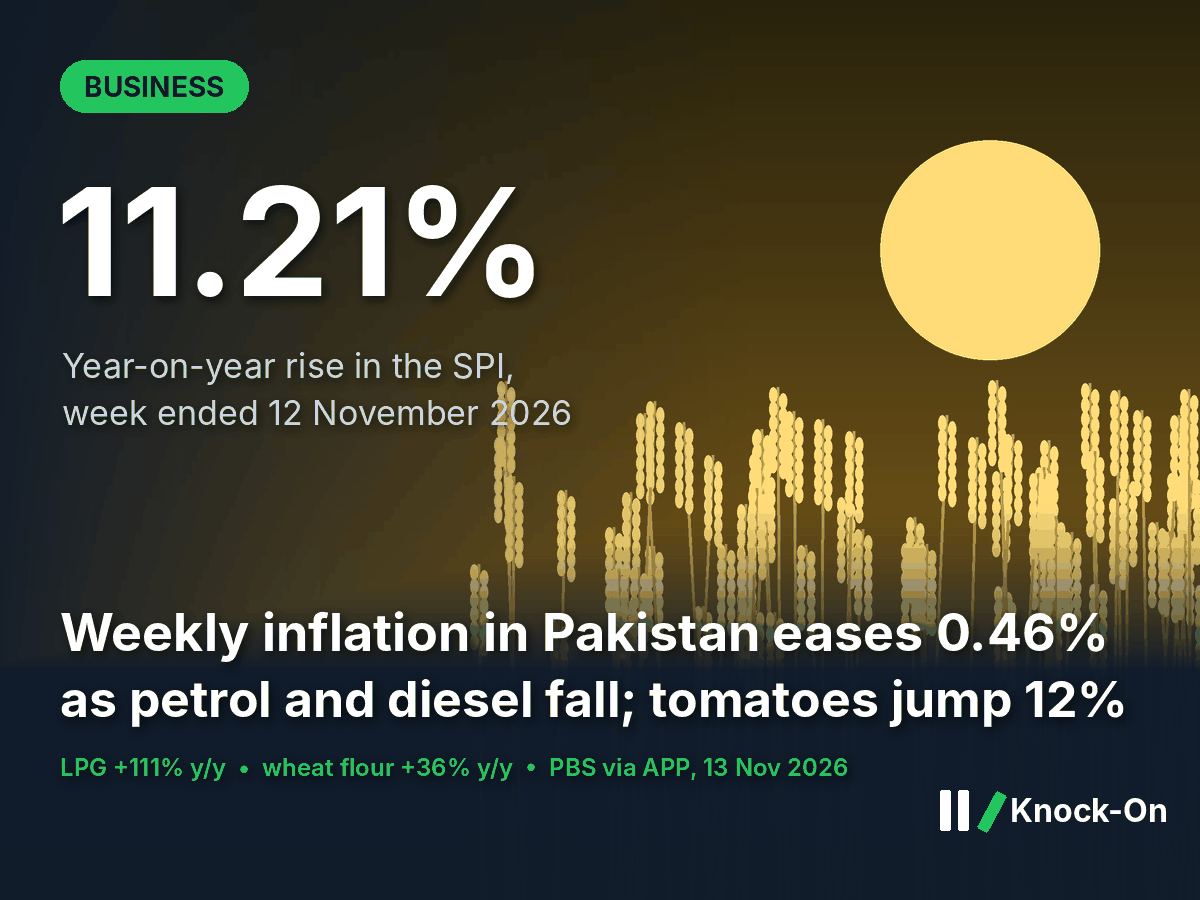
Recent fuel cuts have helped weekly inflation ease. A renewed oil shock would reverse that, making it harder for the State Bank to cut rates and raising costs for transport, manufacturing and agriculture together.
Who could benefit
- Refiners with diversified crude sources, such as US cargoes, which are less exposed to one Gulf route.
- Storage and terminal operators if Gulf suppliers take up offers to store fuel in Pakistan.
- Exploration and production companies, whose oil and gas revenues rise with international prices.
Who may face pressure
- Transporters and logistics firms, as diesel is still Rs360 a litre.
- Oil marketing companies holding stock bought at higher prices, if supply becomes unreliable.
- Importers and the rupee, since a higher oil bill widens the import payments Pakistan must finance.
What to watch
- Any Saudi or Aramco statement on Yanbu loadings and the East-West pipeline.
- OGRA’s next fuel price notice, after the current prices expire on Monday, 16 November.
- Trilateral talks in China that a senior US official said will include Iran, reported by Gulf News as due next week.
- Further reports of tanker incidents in Hormuz and the Red Sea, and their effect on freight and insurance costs.
Sources
- The New Arab, Yemen’s Houthis claim attacks on Saudi oil, military sites, 12 November 2026
- Cyprus Mail (Reuters), Yemen’s Houthis say they attacked pumping station on Saudi Arabia’s East-West oil pipeline, 12 November 2026
- Pipeline & Gas Journal, Houthis say they attacked Saudi Arabia’s 4-MMbpd East-West pipeline, 10 November 2026
- Business Recorder, Govt reduces petrol price by Rs2 per litre, keeps diesel rate unchanged, 13 November 2026
- Business Recorder (Reuters), Oil prices set for second weekly decline as Trump sticks with Iran blockade, 13 November 2026
- Gulf News, Middle East War: US signals restraint as Iran warns of retaliation, 14 November 2026
- Daily Pakistan, Pakistan’s oil supply faces another shock as Houthi attacks shut Yanbu route, 19 September 2026
- Arab News (Reuters), Pakistan refiner Cnergyico expands US crude imports amid Hormuz disruption, 17 August 2026
- The News, Pakistan ‘starts’ crude oil imports via Red Sea after Strait of Hormuz blockade, 11 March 2026
This is analysis, not investment advice. Figures are as of 14 November 2026. Knock-On is not affiliated with any political party.

Leave a Reply