
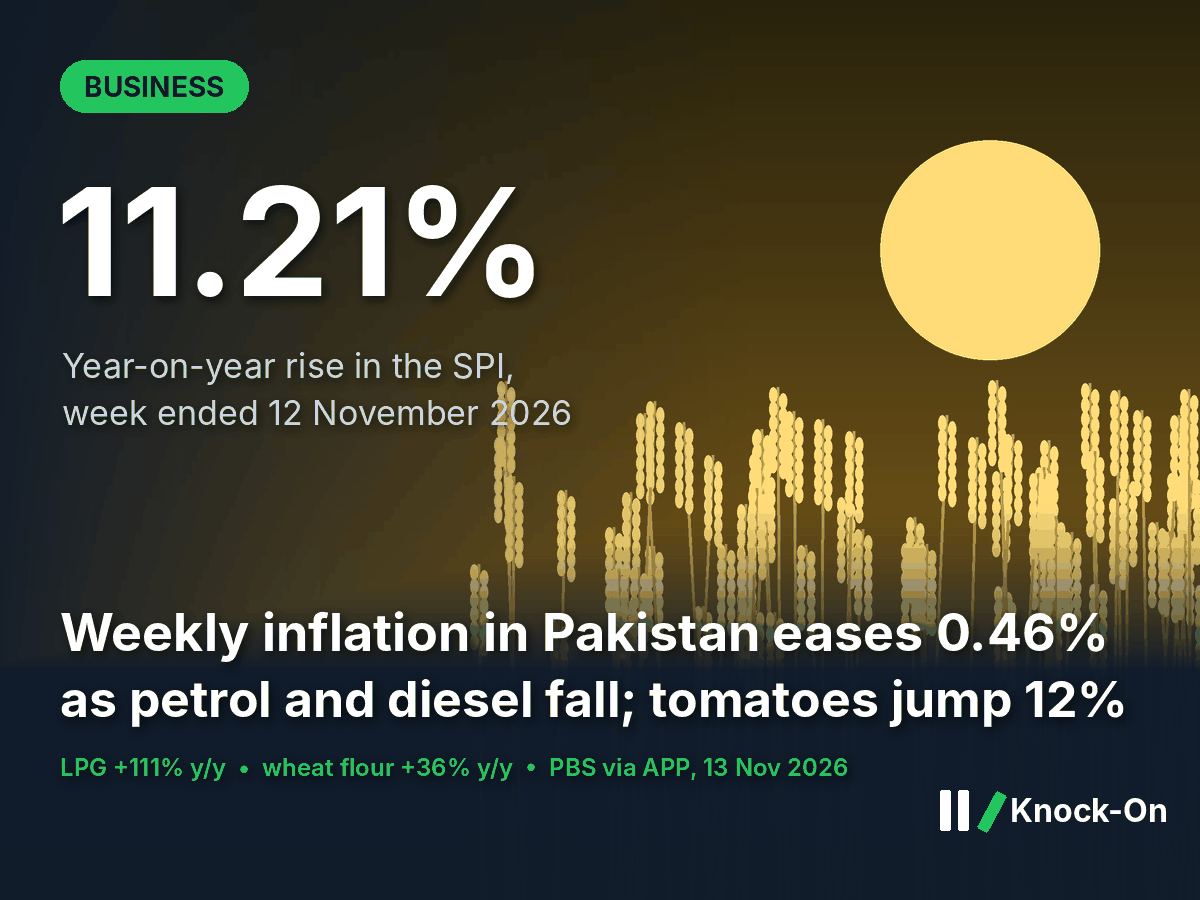
Weekly inflation in Pakistan eased again as cheaper fuel worked its way into household costs. The Sensitive Price Indicator (SPI), which tracks 51 essential items in 17 cities, fell 0.46% in the week ended 12 November, according to Pakistan Bureau of Statistics (PBS) data reported by APP. But prices are still 11.21% higher than a year ago, and the items driving that yearly rise, from LPG to wheat flour and electricity, are the ones businesses and workers cannot easily avoid.
The short version
- The SPI fell to 372.90 points from 374.61 the previous week, a 0.46% drop.
- Petrol (down 7.42%) and diesel (down 6.10%) led the weekly fall.
- Tomatoes (up 12.06%), eggs (5.98%) and potatoes (2.42%) rose.
- Year on year, the SPI is up 11.21%, with LPG up 111.35% and wheat flour up 36.14%.
What happened
Of the 51 items in the index, 19 became more expensive during the week, 9 got cheaper and 23 were unchanged, APP reported on 13 November, citing PBS. Fuel did most of the work on the downside: petrol fell 7.42% and diesel 6.10% week on week, following the government’s latest cut covered in our petrol price in Pakistan report. Onions (1.70%), bananas, gur, sugar and powdered milk also eased.
Food moved the other way. Tomatoes rose 12.06% in a week, eggs 5.98%, potatoes 2.42%, garlic 1.76%, chicken 1.32% and wheat flour 0.94%. LPG edged up 0.30%. The weekly fall was felt most by better-off households: the index for the highest income group (above Rs44,175 a month) fell 0.68%, while the lowest group (up to Rs17,732) rose 0.03%, because fuel weighs less and food more in poorer households’ spending.
LPG, tomatoes and power bills drive the yearly rise
Year-on-year price change, %, week ended 12 Nov 2026
Why it matters
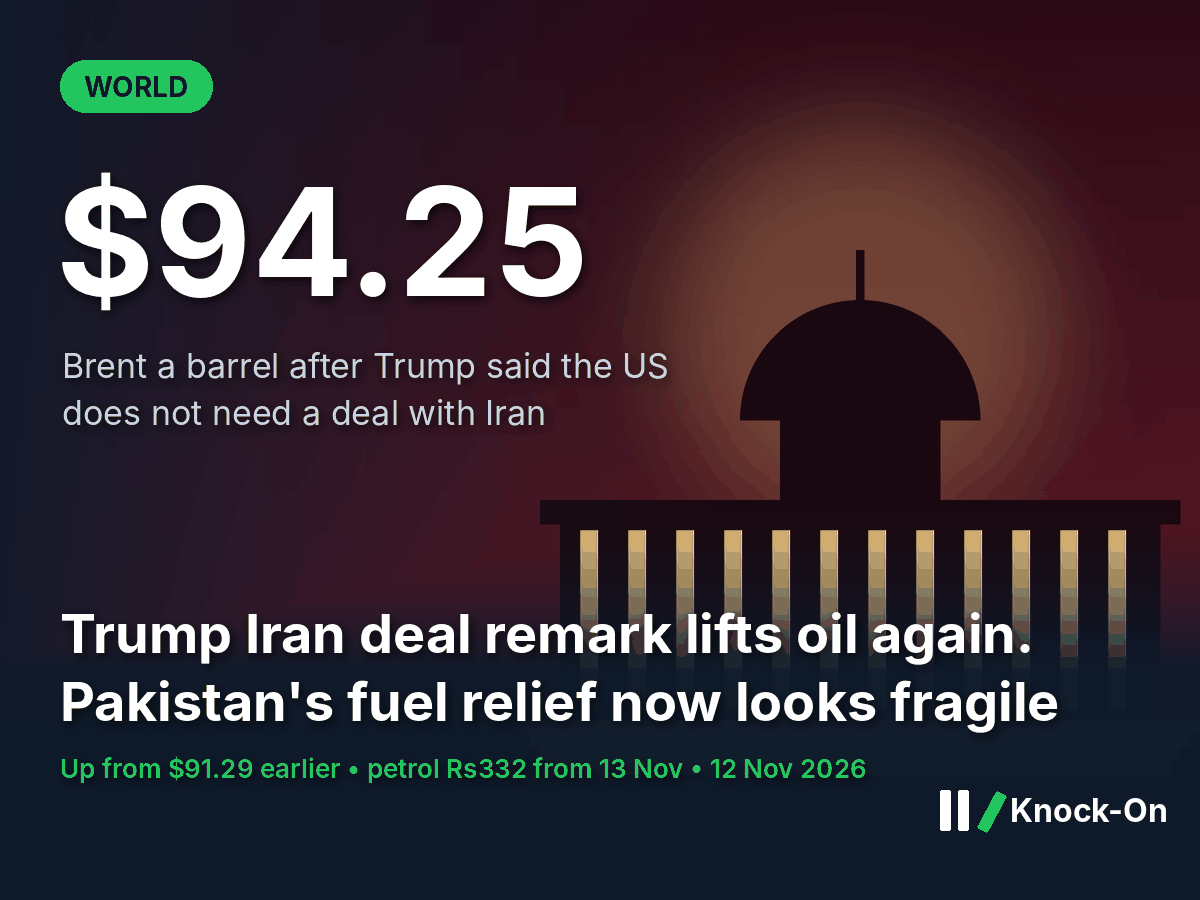
The SPI is the fastest read on weekly inflation in Pakistan, and it feeds expectations for the monthly consumer price index and for interest rates. This week’s message is mixed. Fuel cuts are clearly lowering transport and input costs, but the yearly increases in energy and staples show that the cost base for households and small firms remains much higher than in 2025. The fuel relief is also exposed to oil: as we reported this morning, oil climbed back to $94 after a Trump remark on Iran, which could slow or reverse further cuts.
The knock-on effects
First order: weekly inflation in Pakistan eases on fuel
Cheaper petrol and diesel lower costs for transporters, delivery firms and commuters straight away. Diesel matters most for freight and farm machinery, so the cut should reach goods prices with a lag.
Second order: food and LPG squeeze wages
With LPG more than double last year’s level and flour up over a third, lower-income households are spending more on basics. That limits demand for other goods and keeps pressure on employers for wage increases.
Third order: the rate outlook depends on oil
If fuel cuts continue, headline inflation could ease further, which borrowers and the stock market would welcome. If oil stays near $94, that support fades and food prices become the main driver again.
Who could benefit
- Transporters and logistics firms: petrol and diesel fell 7.42% and 6.10% in a week.
- Sugar-using food makers: sugar is 24.54% cheaper than a year ago.
- Higher-income households: their price index fell 0.68% this week.
Who may face pressure
- Low-income households, whose index rose 0.03% despite cheaper fuel.
- Restaurants, bakeries and caterers facing higher LPG, flour and tomato costs.
- Small electricity users: the SPI’s lowest-consumption electricity item (Q1) is up 52.38% year on year.
What to watch
- Next week’s SPI release from PBS.
- The next fuel price review and global oil prices after the latest US-Iran remarks.
- Tomato and potato prices as seasonal supply changes.
Sources
- APP, Weekly inflation decreases 0.46pc, 13 Nov 2026 (citing Pakistan Bureau of Statistics)
This is analysis, not investment advice. Figures are as of 13 November 2026.

Leave a Reply