
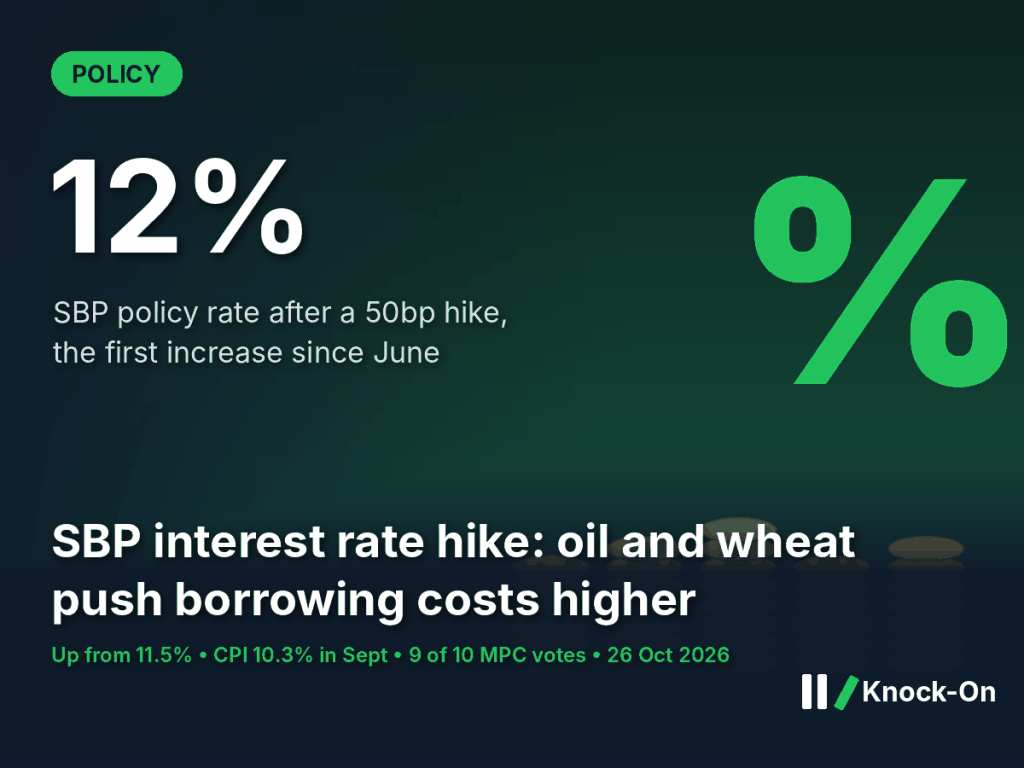
The SBP interest rate is now 12%. The State Bank of Pakistan’s Monetary Policy Committee (MPC) raised the policy rate by 50 basis points from 11.5% on Monday, 26 October, its first increase since June. Governor Jameel Ahmad said the inflation outlook had deteriorated because of the geopolitical crisis, with oil above $100 a barrel and wheat prices rising. For companies, it means dearer working capital at a time when energy costs are already squeezing margins.
The short version
- The policy rate rose 50 basis points to 12%; nine of the ten MPC members voted for the hike and one wanted a larger increase.
- Headline inflation was 10.3% in September, well above the SBP’s 5–7% target range.
- Growth (3.5–4.5%) and current account (0–1% of GDP) projections were left unchanged; the remittance outlook was raised to $45bn.
- The next MPC meeting is on 14 December 2026.
What happened
The MPC met for the third time in fiscal year 2026-27 and lifted the SBP interest rate to 12%, according to Business Recorder and The News. It had held the rate at 11.5% at its 14 September meeting. Announcing the decision in Karachi, the governor said conditions had worsened since September: petroleum prices had stayed above $100 and wheat prices had risen over the past two to three months. Business Recorder quoted him as saying that “the inflation outlook deteriorated significantly because of the ongoing geopolitical crisis.”
The move was largely expected. As Knock-On reported in its preview of the SBP interest rate decision, a Topline poll found 61% of market participants expected a hike, most of them by 50 basis points. The Pakistan Institute of Development Economics (PIDE) had argued for a hold, saying the data did not yet show demand overheating.
The new 12% rate sits only 1.7 points above September inflation
SBP policy rate, headline CPI inflation and target, % a year, as of 26 Oct 2026
Why it matters
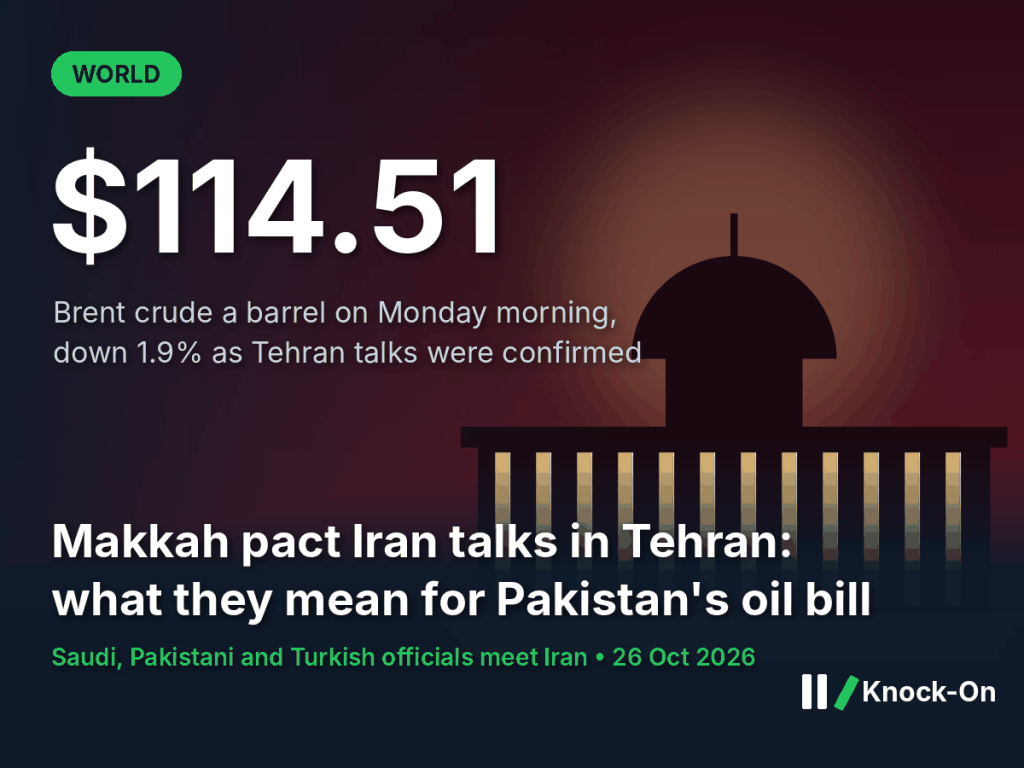
The SBP interest rate is the benchmark for bank lending, so a higher rate raises the cost of running finance, trade finance and consumer loans. With inflation at 10.3% in September, the real rate measured against that month is only about 1.7 percentage points. Foundation Securities estimated the hike lifts the ex-post real rate to about 2.5% on its October inflation estimate, from about 1.2% in September. The SBP is signalling that it wants a firmer buffer while oil stays high: Brent was trading at $114.88 on Monday, Business Recorder reported, and the energy shock is already showing up in weekly SPI inflation driven by LPG, electricity and fuel.
The knock-on effects
First order: the SBP interest rate hike makes borrowing dearer
Floating-rate loans priced off KIBOR will reprice upward over the coming weeks. Manufacturers that rely on short-term working capital, traders financing imports and car and home borrowers face higher instalments.
Second order: slower private credit and investment
Higher financing costs on top of high fuel and power bills may lead firms to delay expansion. Government borrowing costs also rise, which matters for a budget that must finance a large deficit this year.
Third order: the oil price decides the next move
The governor tied the decision to energy and wheat prices. If Gulf diplomacy, including the Makkah pact Iran talks, brings oil down, pressure for further hikes eases; if prices rise again, the December meeting could bring another increase.
Who could benefit
- Savers and depositors: returns on savings accounts and short-term government paper are likely to edge up.
- Banks: lenders with large floating-rate loan books may earn wider margins in the near term.
- Overseas Pakistanis: a firmer policy stance can support the rupee, and remittances are now projected at $45bn this year.
Who may face pressure
- Leveraged manufacturers: cement, steel and textile firms with heavy short-term debt.
- Car and property buyers: auto finance and mortgages become more expensive.
- SMEs: smaller firms already paying high energy costs have less room to absorb dearer credit.
- The federal budget: interest payments on domestic debt rise with the policy rate.
What to watch
- Early November: October CPI inflation from the Pakistan Bureau of Statistics.
- Oil prices: whether Brent stays above $100 as Gulf talks continue.
- Wheat: flour and wheat prices, which the governor named as an inflation driver.
- 14 December 2026: the next MPC meeting.
Sources
- Business Recorder, SBP hikes policy rate to 12% on inflation, energy price concerns, 26 Oct 2026
- The News, SBP jacks up monetary policy rate to 12%, 26 Oct 2026
- ProPakistani, SBP hikes interest rate first time since June 2026, 26 Oct 2026
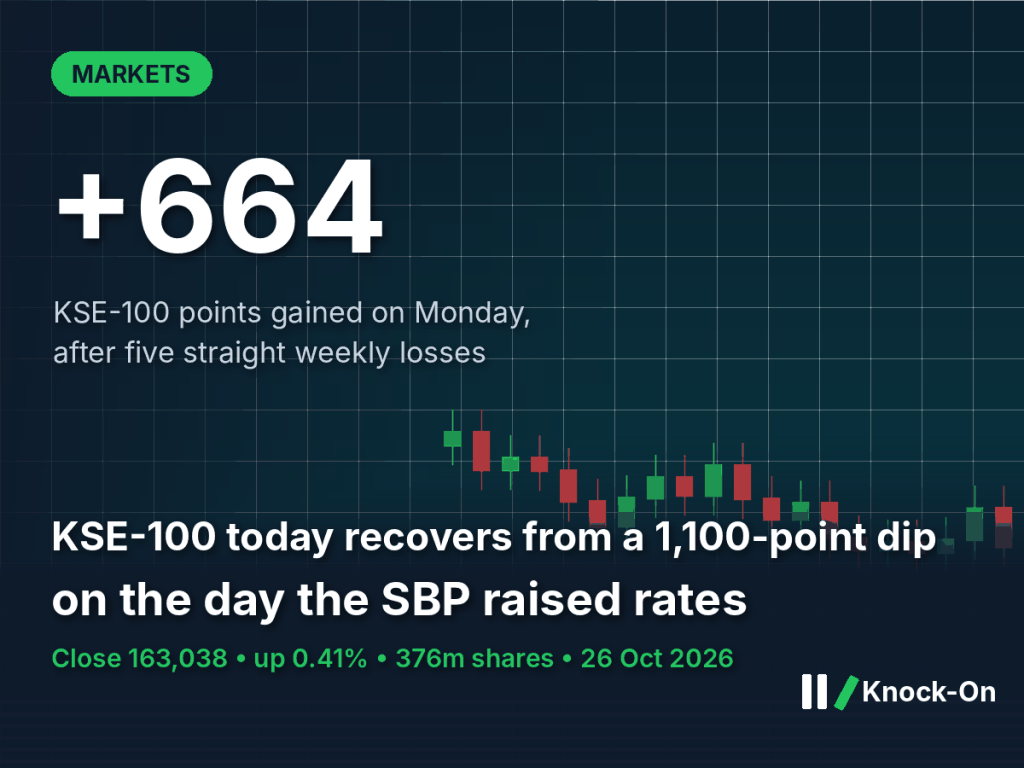
- Business Recorder, PSX: volatility at bourse, KSE-100 settles with over 650 points gain, 26 Oct 2026
This is analysis, not investment advice. Figures are as of 26 October 2026.

Leave a Reply