
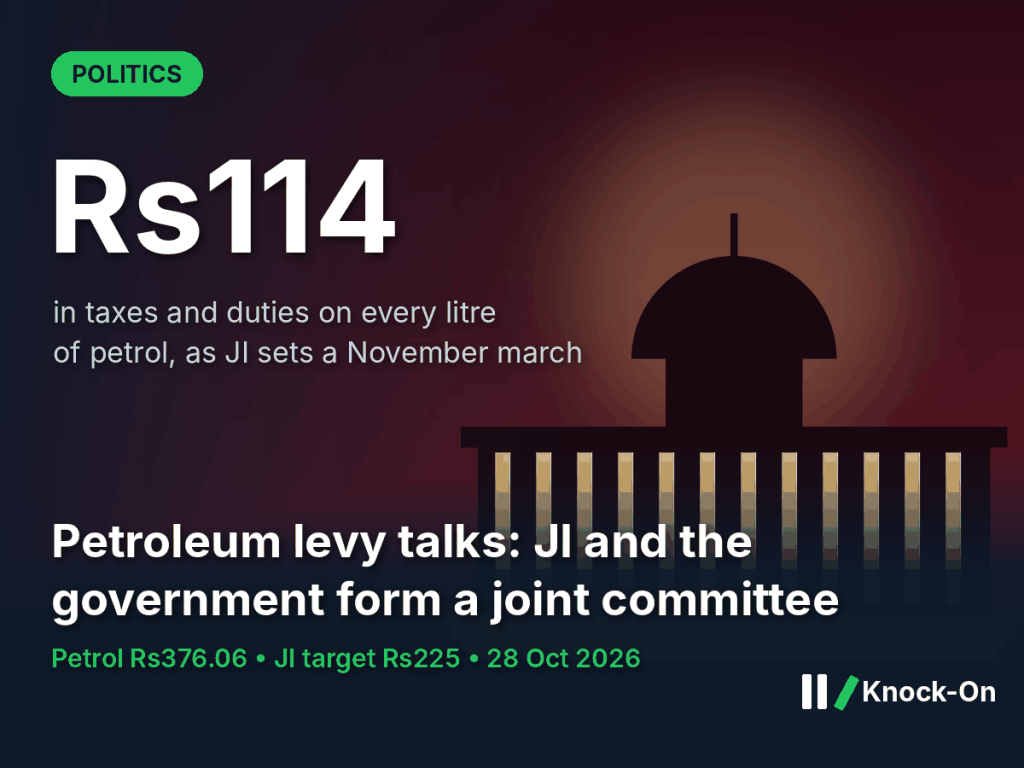
The petroleum levy in Pakistan has moved from the street to a negotiating table. Prime Minister Shehbaz Sharif and Jamaat-i-Islami (JI) chief Hafiz Naeemur Rehman agreed on Tuesday to form a joint committee to look at expanding the fuel relief scheme and a phased cut in the levy, Dawn reported. JI says its march on Islamabad will still go ahead in mid-November if no relief package is announced. For businesses, the stakes are the price of every litre of fuel they buy and the tax revenue that underpins the IMF programme.
The short version
- Three ministers and three JI leaders will recommend how to widen petrol relief and cut the levy in phases.
- Petrol carries Rs114 a litre and diesel Rs100 a litre in taxes and duties, according to Arab News and Dawn.
- JI wants petrol at Rs225 a litre; it is Rs376.06 from 28 October.
- JI says the prime minister asked for seven to 10 days to announce relief.
What happened
According to Dawn, the meeting at PM House on 27 October produced a six-member committee. The government side is Deputy Prime Minister Ishaq Dar, Planning Minister Ahsan Iqbal and the prime minister’s political adviser Rana Sanaullah. JI is represented by Liaquat Baloch, Syed Farasat Shah and Nasrullah Randhawa. Its brief is to expand the petrol relief scheme to more people and to prepare “feasible proposals for the budget” for a phased reduction in the petroleum levy. The prime minister said 12.7 million people have registered for the relief scheme for motorcycles, rickshaws and cars up to 800cc, and Rana Sanaullah said the number could reach 20 million.
The two sides still differ. Rehman told reporters the gap was “elimination versus phased reduction” and rejected a reported offer to cut the levy by Rs20–30 a litre, Dawn reported. Prime Minister Shehbaz said the price rise stems from regional and international oil prices, and Ahsan Iqbal said any relief must be affordable and “durable”. Arab News reported that Rehman said the prime minister had asked for seven to 10 days to announce relief.
Removing every rupee of tax would still leave petrol above JI’s target
Petrol, rupees per litre, from 28 October 2026
Why it matters
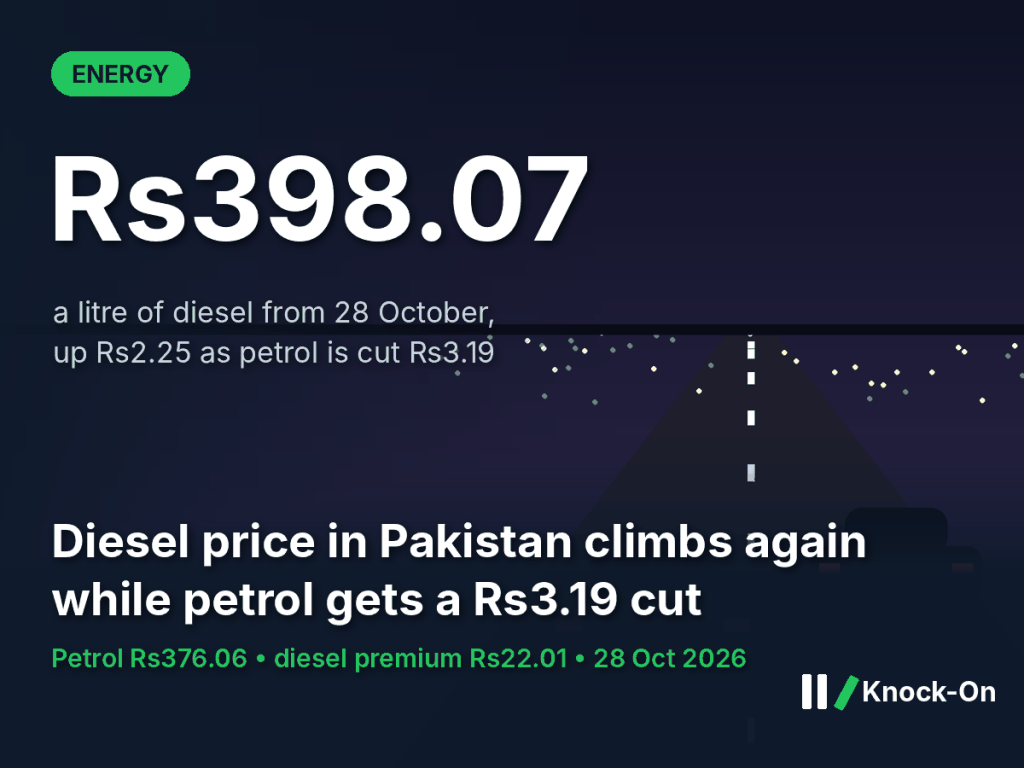
The petroleum levy is one of the government’s largest revenue lines. Profit reported this month that the 2026-27 budget targets Rs1.676trn from it, up from Rs1.567trn collected in 2025-26, and that the levy helps maintain the primary surplus agreed with the IMF. Any cut has to be funded elsewhere, through other taxes, spending cuts or a wider deficit. At the same time, fuel is already a heavy cost: as Knock-On reported, the diesel price in Pakistan rose to Rs398.07 on 28 October even as petrol was cut. Knock-On’s arithmetic shows that even abolishing all Rs114 of taxes would leave petrol at about Rs262, above JI’s Rs225 target, because the rest of the price reflects oil costs and margins.
The knock-on effects
First order: a petroleum levy cut would lower fuel costs
A phased cut, if agreed, would reduce pump prices directly. Transporters, delivery firms and two-wheeler commuters would feel it first. A wider relief scheme, reaching up to 20 million people according to Rana Sanaullah, would target households instead, as the earlier petrol subsidy audit showed is hard to do cleanly.
Second order: the budget and the IMF
Lost levy revenue would need replacing to keep fiscal targets. The committee’s brief to prepare “proposals for the budget” suggests any phased cut may be tied to the next budget cycle rather than made immediately. That timing matters for firms planning fuel costs for the rest of the year.
Third order: protests and business days
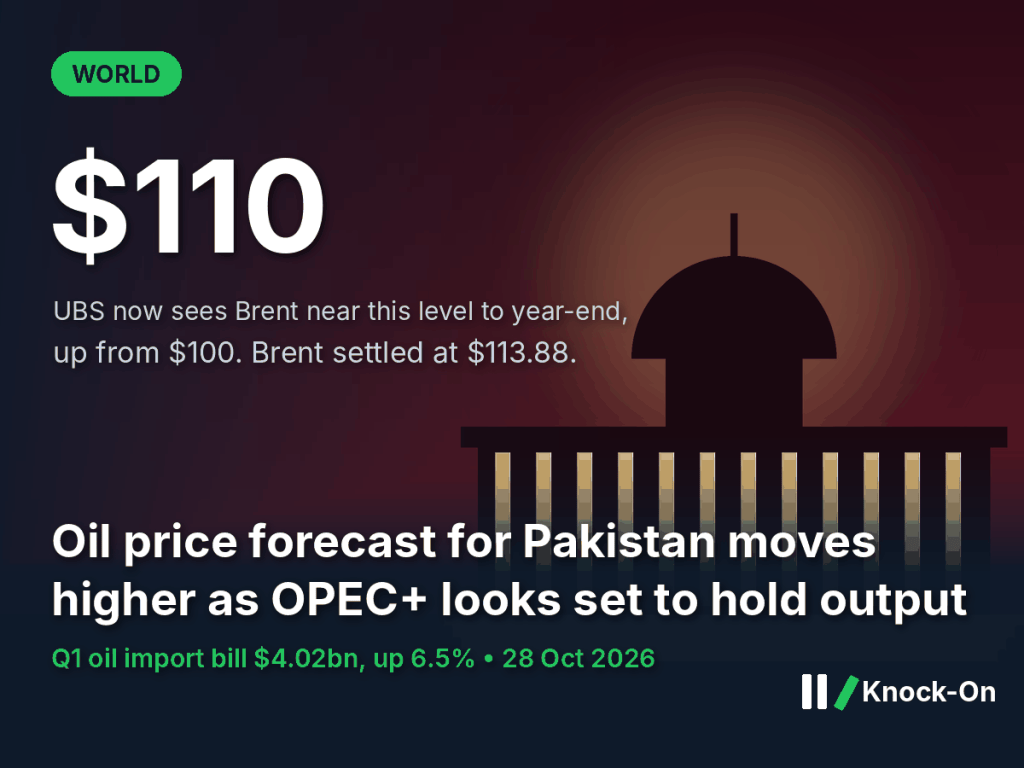
JI has staged sit-ins, a planned strike and a march since August. A mid-November march would bring the risk of road closures and lost trading days in Islamabad and along its route. Fuel prices also depend on oil markets; Knock-On’s oil price forecast for Pakistan notes UBS now expects Brent near $110 to year-end.
Who could benefit
- Transport and logistics firms: any levy cut lowers their largest variable cost.
- Two-wheeler and small-car users: a wider relief scheme would reach more of them.
- Fuel retailers: lower prices could support volumes.
Who may face pressure
- The federal budget: the levy is budgeted to raise Rs1.676trn this year.
- Other taxpayers: a revenue gap may be filled with other measures.
- Businesses in Islamabad and on march routes: protests can disrupt trade.
What to watch
- Early November: whether the government announces relief within the seven to 10 days JI says the prime minister requested.
- Mid-November: JI’s planned march on Islamabad.
- The committee’s report: the size and timing of any phased levy cut.
- Daily fuel prices: oil-market moves will keep changing the pump price.
Sources
- Dawn, Joint JI-govt committee to mull ways to expand fuel relief scheme, 27 October 2026
- Arab News Pakistan, Pakistan party says will proceed with Islamabad march over petroleum levy in mid-November, 27 October 2026
- Dawn, Govt cuts petrol price by Rs3.19 per litre, ups high-speed diesel rate by Rs2.25, 27 October 2026
- Profit by Pakistan Today, Govt weighs NA vote on petroleum levy amid protests, 9 October 2026
This is analysis, not investment advice. Figures are as of 28 October 2026. Knock-On is not affiliated with any political party.

Leave a Reply