
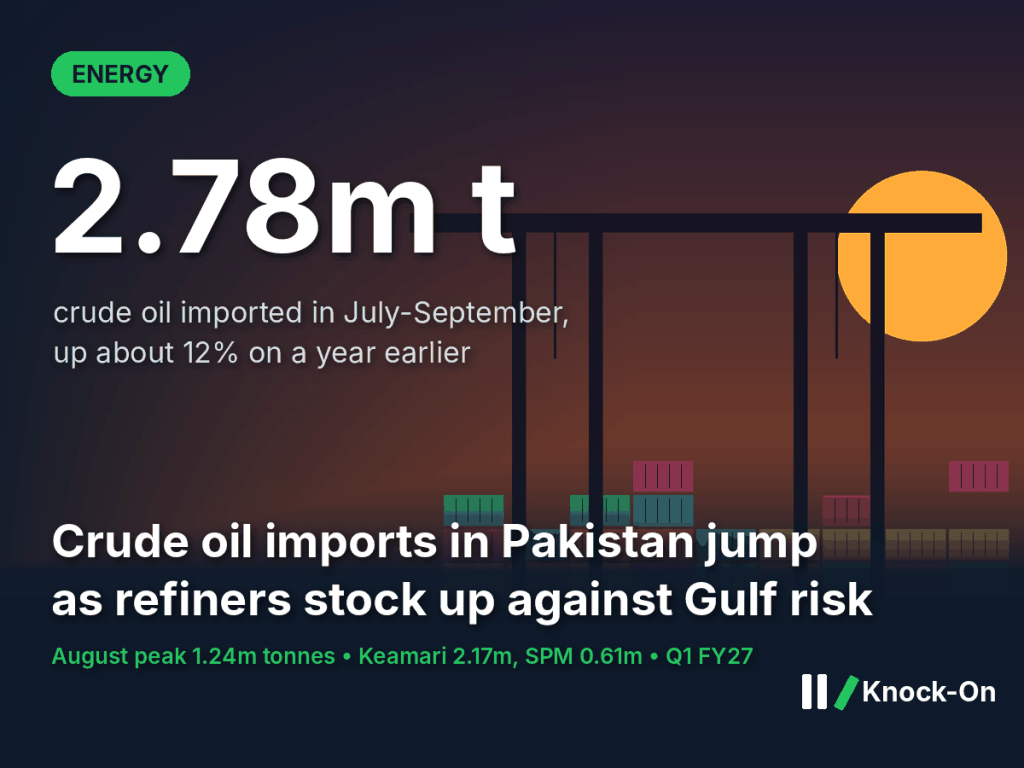
Crude oil imports in Pakistan rose to 2.78 million tonnes in July-September 2026, about 12% more than the 2.48 million tonnes brought in a year earlier, according to shipping data reported by ProPakistani on 23 October. Refiners bought heavily in August, worried that the Middle East crisis could disrupt supply. With Brent crude now above $112 a barrel, the extra cargoes cushion local fuel supply but add to the dollar bill for imports.
The short version
- Pakistan imported 2,780,176 tonnes of crude in the first quarter of 2026-27, up about 12% year on year.
- August was the peak, at about 1.24 million tonnes, before imports fell back to 778,964 tonnes in September.
- Keamari handled 2.17 million tonnes; the Single Point Mooring took 0.61 million tonnes.
- Refiners also exported 307,368 tonnes of furnace oil over the quarter.
What happened
ProPakistani reports that crude oil imports into Pakistan were 763,702 tonnes in July, about 1.238 million tonnes in August and 778,964 tonnes in September. The August jump, about 62% above July, came as refineries tried to secure crude ahead of “possible supply disruptions caused by the Middle East crisis.” Earlier in the year, PARCO arranged supplies through alternative routes.
Refiners front-loaded crude buying in August
Pakistan crude oil imports by month, tonnes, July-September 2026
Refined products kept arriving too. Imports of 92 RON petrol were 1.275 million tonnes over the quarter, mostly through FOTCO, alongside 83,497 tonnes of high-speed diesel in August. On the export side, refiners shipped out 307,368 tonnes of furnace oil.
Why it matters
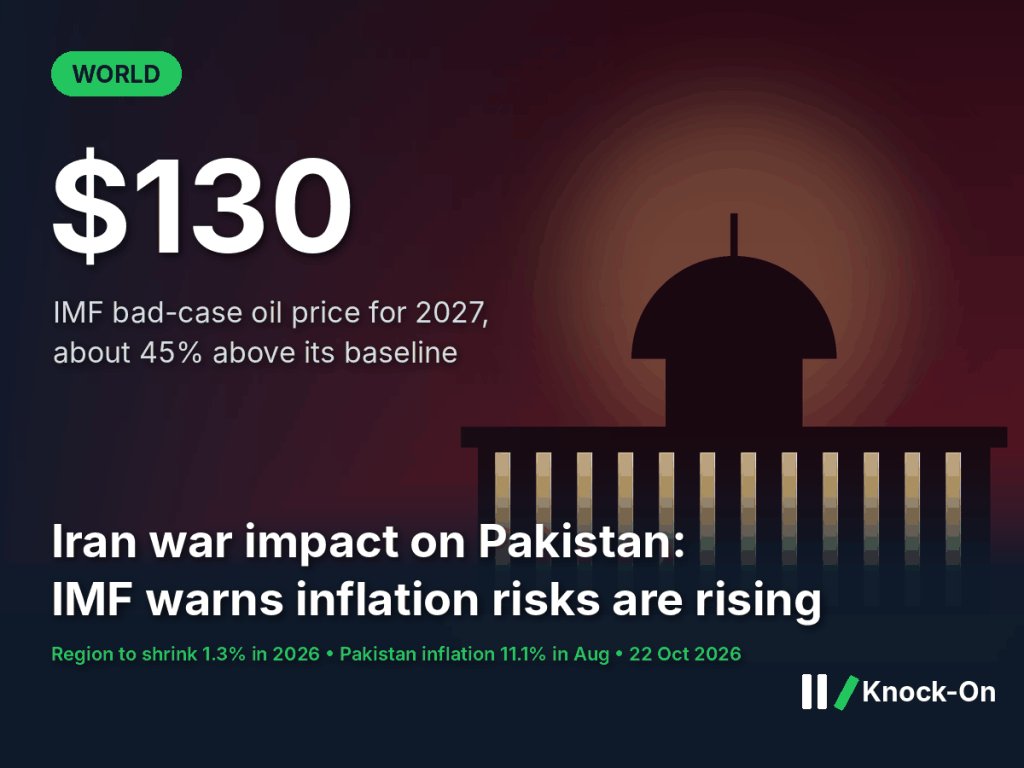
Higher crude oil imports in Pakistan mean more fuel refined at home and less dependence on buying finished petrol and diesel at short notice, which matters if Gulf shipping is disrupted. The cost is paid in dollars. The IMF this week warned that the Iran war impact on Pakistan could deepen if fighting runs into 2027, with oil at about $130 a barrel in its adverse case. Earlier Knock-On analysis estimated that Pakistan’s oil import bill could rise by up to $1.2bn a quarter at current prices.
The knock-on effects
First order: steadier fuel supply
Stockpiled crude gives refineries a buffer against delayed cargoes, reducing the risk of local shortages at pumps and of emergency product imports at premium prices.
Second order: a larger import bill
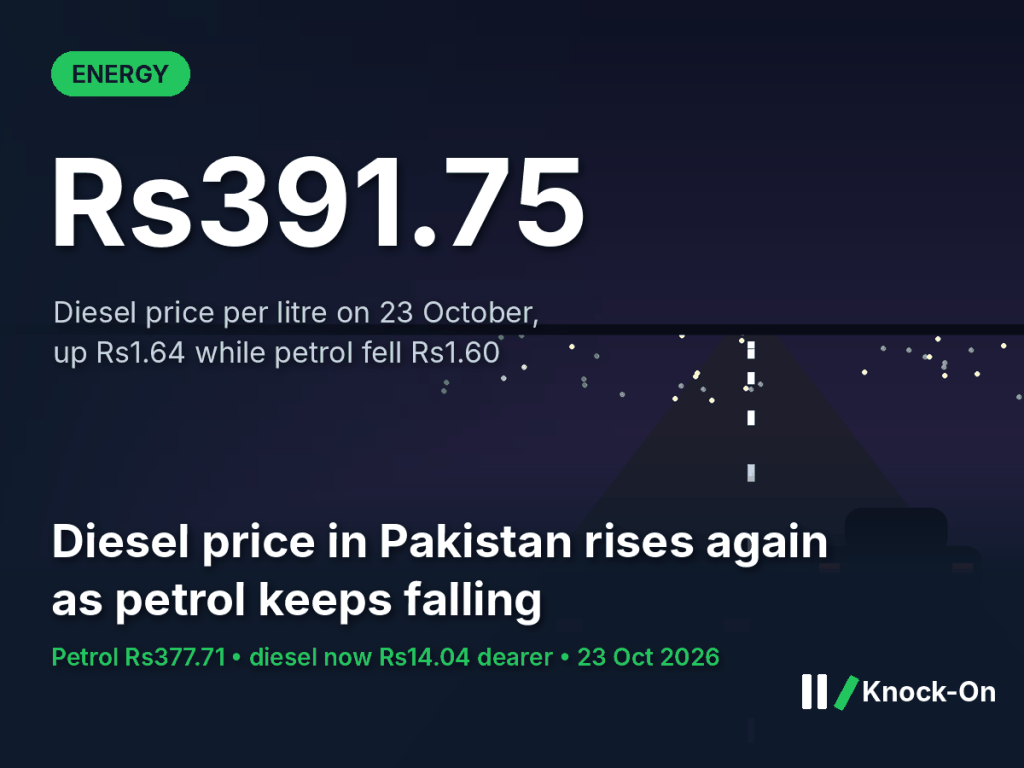
Brent rose to $112.17 on 22 October, its highest since May, according to Reuters. More tonnes at higher prices add to demand for dollars and to pressure on the current account. Fuel prices still move with global prices: the diesel price in Pakistan rose again to Rs391.75 a litre on 23 October.
Third order: refinery economics
Refining more crude also yields more furnace oil, and refiners exported 307,368 tonnes of it over the quarter. How profitably they can sell those surpluses abroad will affect their margins and their appetite to keep crude imports high.
Who could benefit
- Refiners: higher throughput and secured feedstock while Gulf supply is uncertain.
- Fuel retailers and transporters: lower risk of supply gaps at pumps.
- Port and storage operators: more cargo handled at Keamari and the SPM.
Who may face pressure
- The current account and the rupee: more crude at higher prices raises dollar demand.
- Refiners holding expensive stock: exposed to inventory losses if oil prices fall sharply.
- Fuel-heavy businesses: stockpiles protect supply, not price.
What to watch
- October import data: whether crude buying stays near September levels or rises again.
- 26 October: the SBP policy decision, as oil-driven inflation shapes rates.
- Gulf shipping: attacks on tankers or Saudi oil sites that could disrupt cargoes.
Sources
- ProPakistani, Pakistan’s Crude Oil Imports Jump 12% to 2.78 Million Tonnes in Q1, 23 October 2026
- Express Tribune (Reuters), Oil jumps on escalating Middle East conflict, 22 October 2026
- Business Recorder, IMF flags rising inflation risks for Pakistan amid Middle East conflict, 22 October 2026
This is analysis, not investment advice. Figures are as of 23 October 2026.


Leave a Reply