
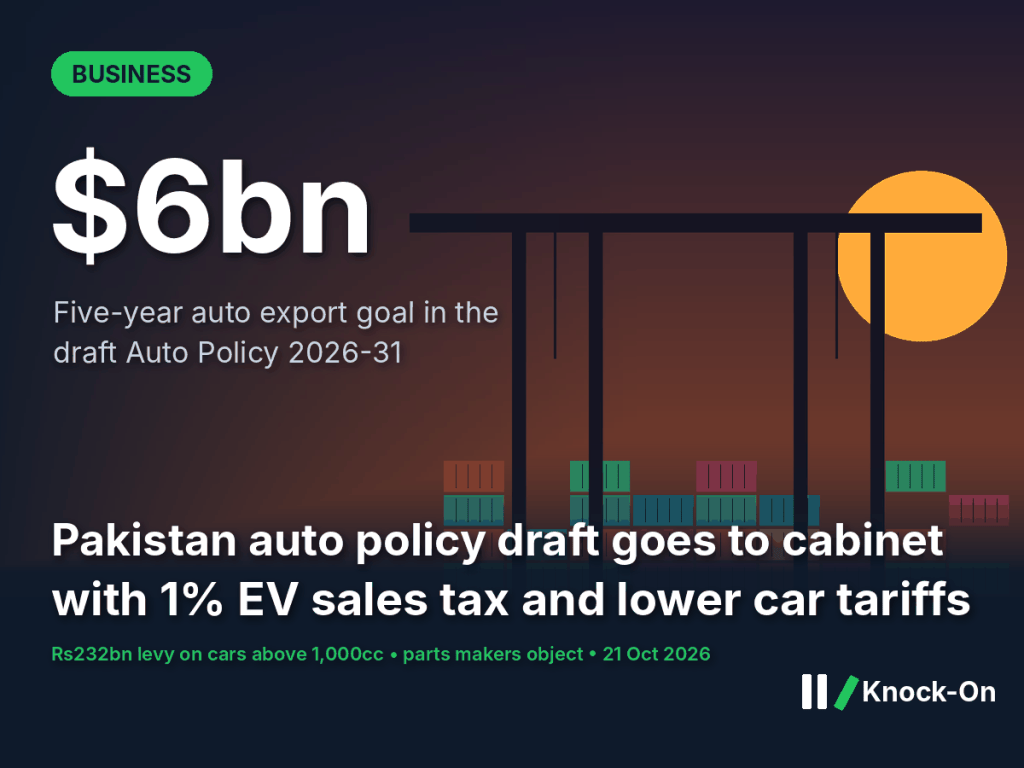
The Pakistan auto policy for 2026-31 has cleared the Prime Minister and now heads to the federal cabinet. The draft promises phased cuts to car and kit tariffs, a 1% sales tax on battery electric vehicles and a target of $6bn in vehicle and parts exports over five years. In return, carmakers would face mandatory export targets, a new levy on bigger cars and the risk of losing their manufacturing certificates. Parts makers say it will hollow out local industry.
The short version
- Prime Minister Shehbaz Sharif approved the draft Auto Policy 2026-31 on 20 October; it now needs cabinet and then parliamentary approval.
- Battery EVs would pay 1% sales tax until 2031; the government reportedly rejected an IMF proposal for 18%.
- An Automotive Development Levy on cars above 1,000cc is expected to raise more than Rs232bn over five years.
- Exporters would get 5% of export value, plus 10% on growth; carmakers that miss targets two years running could lose their certificates.
What happened
Law Minister Azam Nazeer Tarar and Adviser on Industries Haroon Akhtar presented the draft to the Prime Minister on Tuesday, Dawn reported. The PMO issued no statement; the final draft was shared by government sources. The policy now goes to the federal cabinet for in-principle approval and then to parliament.
The Pakistan auto policy lowers tariffs on completely built-up cars and completely knocked-down kits in phases to 15% by 2030-31, according to 24News, with lower tariffs for small EVs priced below $15,000. Range-extended EVs would pay 6% sales tax and plug-in hybrids 9%, while EVs worth more than $75,000 would pay 10% federal excise duty. The EV financing limit rises from Rs3m to Rs10m, with repayment stretched from three to five years.
Export targets rise every year, from $256.6m in 2026-27 to $2.19bn in 2030-31, Dawn reported. Firms that miss local-parts targets could lose incentives. A new Pakistan Automotive Testing Institute and international safety standards for local and imported cars are also planned.
Most of the export push is back-loaded into the final year
Annual vehicle and parts export targets in the draft Auto Policy 2026-31, US$
Why it matters
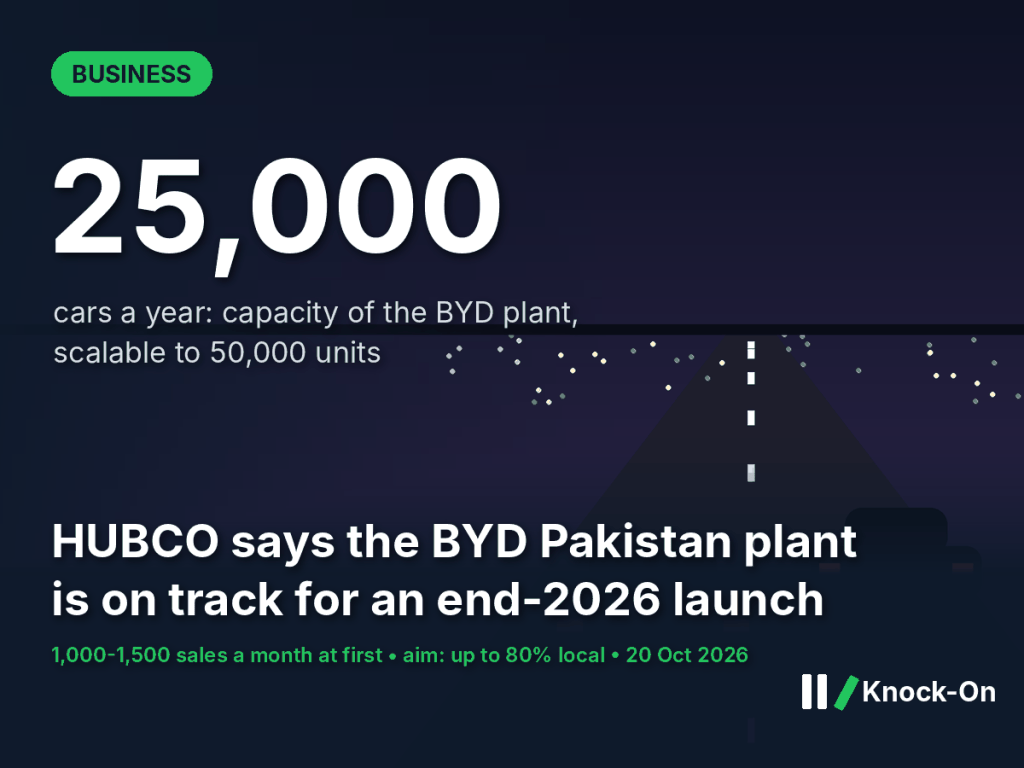
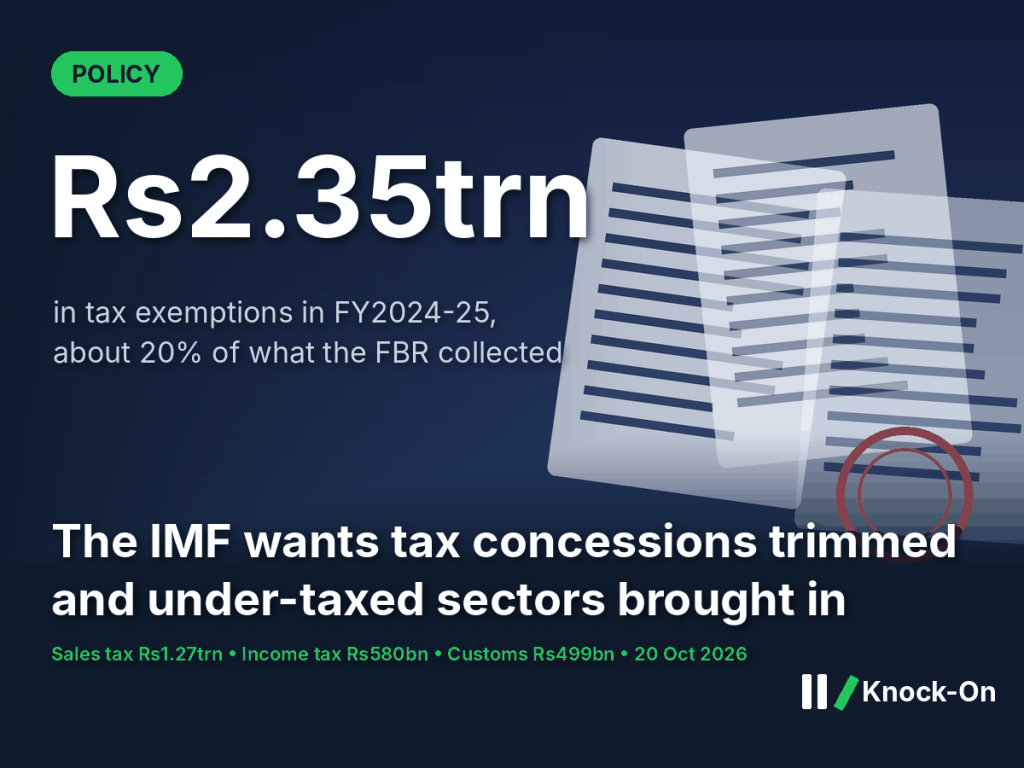
The policy tries to turn a protected, import-dependent assembly industry into an exporter, and it uses both carrots and sticks. That matters at a sensitive moment: auto sector profits were already expected to fall 35% this quarter on tax and policy doubts, and new entrants are arriving. HUBCO said this week that the BYD Pakistan plant will start on imported parts, which the lower kit tariffs would help. The 1% EV tax also sits awkwardly with the IMF’s push, covered in our report on Rs2.35trn of tax exemptions, to trim concessions.
The knock-on effects
First order: cheaper imports and EVs, dearer big cars
Lower tariffs and a 1% sales tax should cut the landed cost of EVs and imported kits, while the development levy adds cost to cars above 1,000cc. Buyers of mid-size petrol cars carry part of the bill for export incentives.
Second order: parts makers squeezed
With the parts import tariff falling to 15%, local vendors face imported competition. Abdul Rehman Aizaz, chairman of the parts makers’ association Paapam, told Dawn the policy would “make Pakistan an import destination country with no local industrial base in the auto sector.”
Third order: exports or exits
Mandatory export targets with certificate cancellation could force carmakers to find foreign buyers or scale back. Whether the targets are met will shape jobs across the vendor base and the auto sector’s call on foreign exchange.
Who could benefit
- EV buyers: 1% sales tax, lower tariffs on small EVs and a Rs10m financing limit over five years.
- New and export-ready assemblers: cheaper kits plus 5% of export value and a 10% bonus on growth.
- Banks and leasing firms: larger, longer EV loans.
Who may face pressure
- Local parts makers: lower tariffs on imported parts.
- Buyers of cars above 1,000cc: the new development levy.
- Assemblers without export plans: penalties and possible loss of certificates.
- Hybrid makers: 9% sales tax on plug-in hybrids, well above the 1% EV rate.
What to watch
- Federal cabinet’s in-principle approval, then the parliamentary vote.
- December 2026: target date for Automotive Development Levy legislation, according to 24News.
- The IMF’s response to the 1% EV sales tax.
- Whether the year-by-year tariff schedule and localisation targets are published.
Sources
- Dawn, Draft auto policy sent to cabinet, 21 Oct 2026
- 24News HD, New Auto Policy approved as Pakistan rejects IMF proposal to raise EV tax, 20 Oct 2026
This is analysis, not investment advice. Figures are as of 21 October 2026.

Leave a Reply