
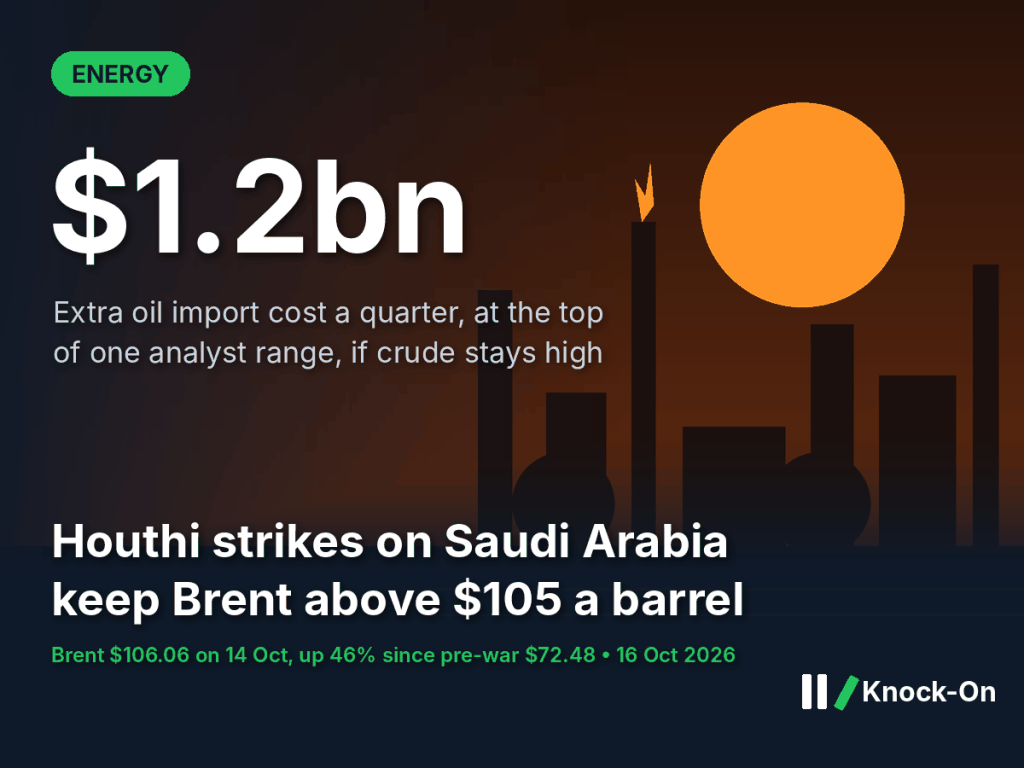
Pakistan’s oil import bill is back in focus. Brent crude settled at $106.06 a barrel on 14 October, about 46% above its level before the US-Iran war began in February, as Houthi missiles and drones hit Saudi airports and an Aramco building. One JS Global Capital analyst estimates that a $20–30 rise in crude sustained for a quarter would add $700 million to $1.2 billion to Pakistan’s import costs.
The short version
- Brent settled at $106.06 on 14 October, up from $72.48 before the war, and was still about $105 on Friday morning.
- Pakistan imported about $17 billion of petroleum products last year; July–August imports were $2.75 billion, up more than 8%.
- JS Global estimates a sustained $20–30 a barrel rise adds $700 million to $1.2 billion to the import bill per quarter.
- Saudi Arabia sent about $2.69 billion of the $10.9 billion in remittances Pakistan received in July–September.
What happened
Yemen’s Houthis have escalated attacks on Saudi Arabia over the past week. A strike on Riyadh’s King Khalid International Airport on Saturday killed 13 people and injured more than 300, Arab News reported, and a later attack hit an administrative building at Saudi Aramco’s headquarters in Dhahran, causing a limited fire, according to the Saudi energy ministry as reported by Business Recorder. Riyadh’s airport has been hit four times. Separately, ships have been struck in and near the Strait of Hormuz.
Brent rose to $106.56 in US trading on 14 October before settling at $106.06. It eased on Friday to $105.24 by late morning Pakistan time, Mettis Global reported, as Washington weighed easing sanctions on some “shadow fleet” tankers to bring down record freight rates. The International Energy Agency has also agreed to release more than 20 million barrels of diesel.
Crude is about $30 a barrel dearer than before the war
Settlement prices, US$ per barrel, before the war (February 2026) and on 14 October 2026
Why it matters
With about $17 billion a year spent on petroleum products, the oil import bill moves the current account, the rupee and inflation together. “I believe oil prices remain the more immediate threat to Pakistan’s import bill,” Muhammad Waqas Ghani, head of research at JS Global Capital, told Arab News. Saudi Arabia is also a major source of remittances, which help pay for that oil. Islamabad is already seeking a 15-year Saudi oil facility worth $6.7bn to spread the cost.
The knock-on effects
First order: a bigger oil import bill and dearer fuel
Higher crude feeds through to pump prices, which now change almost daily. The petrol price rose Rs1.20 to Rs393.86 this week. Transport, logistics and energy-heavy manufacturers carry the cost first.
Second order: pressure on dollars and savings
An extra $700 million to $1.2 billion a quarter would draw on reserves and weigh on the rupee. Muhammad Ahmed, chief executive of Singapore-based Merix Global, warned that prices above $100 could erode household savings through inflation. Remittances are a partial offset: Ghani said airport disruption would only hurt flows if it lasted long enough to affect workers’ earnings, and Ahmed noted expatriates have historically sent more money home in hard times. PIA suspended Riyadh flights last week.
Third order: investor nerves and the rate outlook
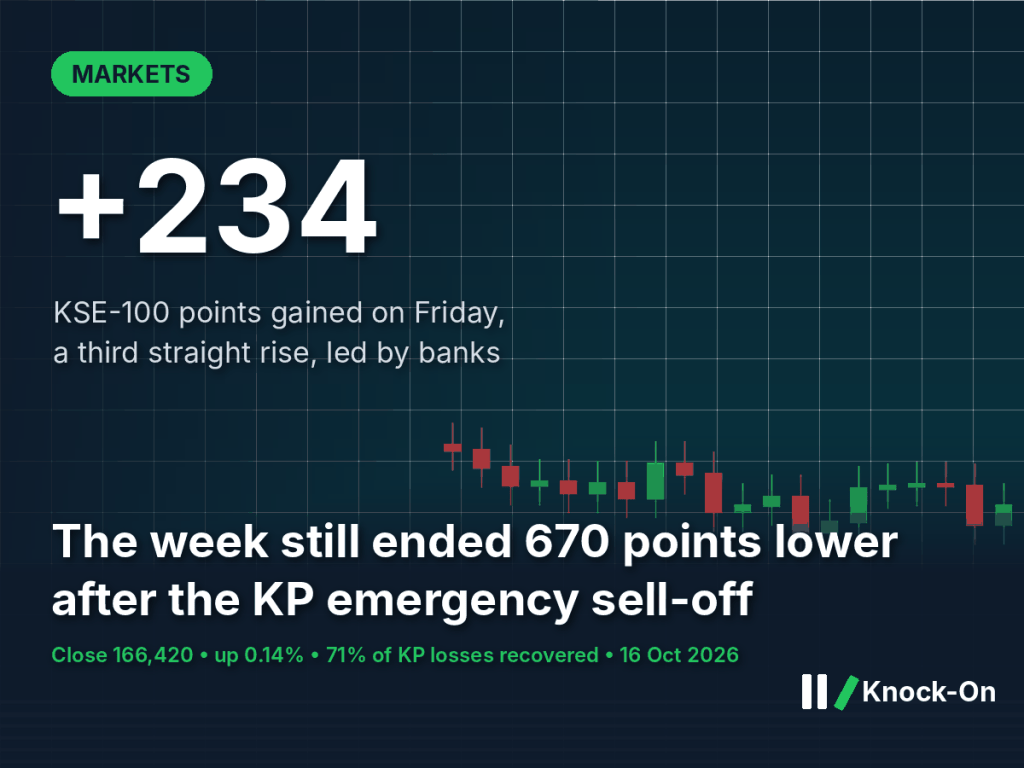
The KSE-100 is down about 1.6% since the last session before the February strikes on Iran, though Arab News notes that cannot be pinned on the Houthi attacks alone; it has recovered in recent sessions. Mohammad Shoaib, chief executive of Lucky Investments, said the attacks are “driving the sentiments negative.” Sustained oil-led inflation would make interest rate cuts harder to justify.
Who could benefit
- Oil and gas producers, whose revenues are linked to international prices.
- Remittance-receiving households, if expatriates send more home, as they have in past crises.
- Solar and efficiency suppliers, as dearer fuel strengthens the case for cutting oil use.
Who may face pressure
- Transporters and logistics firms, facing daily fuel price changes.
- Importers, if a wider oil bill weakens the rupee.
- Airlines and travel agents serving Saudi routes.
- Households, through higher fuel and transport costs.
What to watch
- Whether Brent holds above $100 for weeks, not days, which is what the import-bill estimate assumes.
- PBS trade data for September and October petroleum imports.
- Any US decision on shadow-fleet sanctions, and the IEA diesel release.
- Progress on the Saudi oil facility, and October remittances from Saudi Arabia.
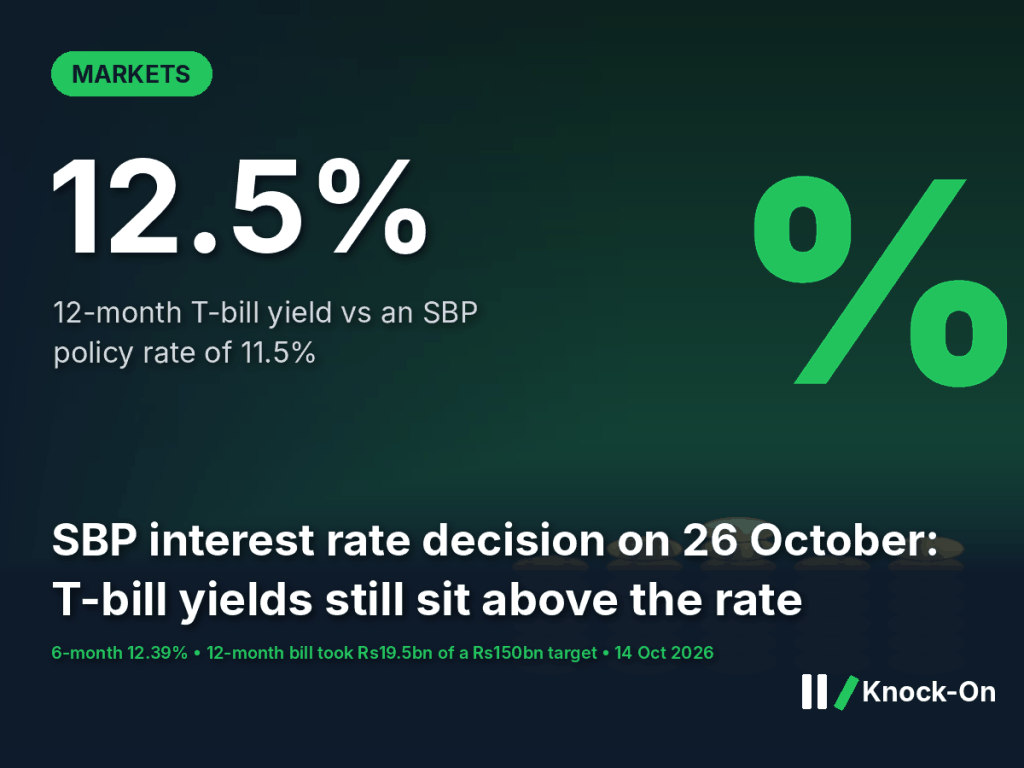
- The SBP monetary policy decision on 26 October.
Sources
- Arab News Pakistan, Houthi attacks on Saudi Arabia raise Pakistan oil import costs, investor concerns, 16 October 2026
- Business Recorder (Reuters), Oil prices gain on attacks in Saudi Arabia, 15 October 2026
- Mettis Global, Oil slips to $105 amid Middle East conflict, supply concerns, 16 October 2026
This is analysis, not investment advice. Figures are as of 16 October 2026.


Leave a Reply